
Corporate Safety Dashboard and KPI – Business Intelligence Tool
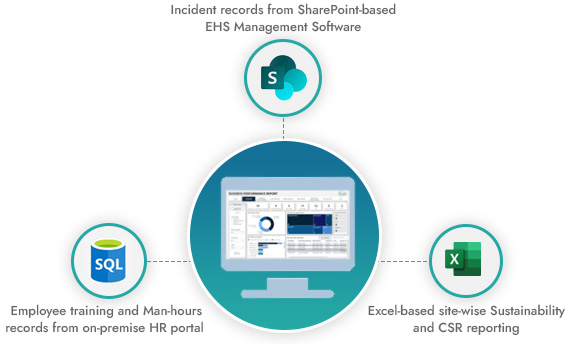
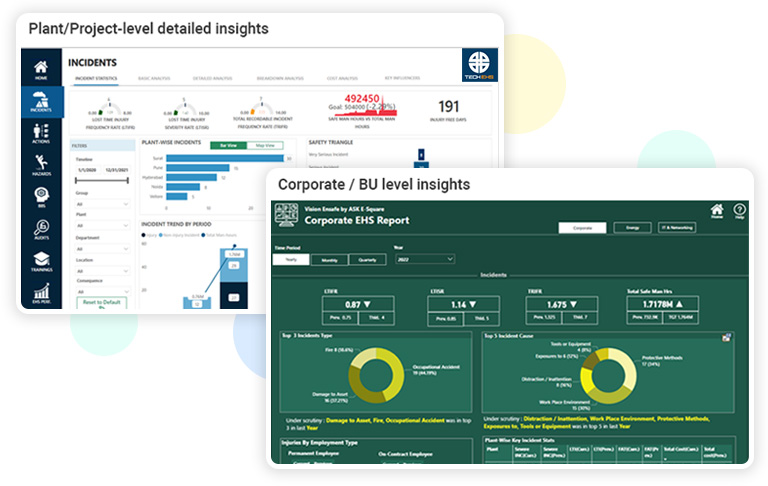
A modern safety dashboard powered by Business Intelligence (BI) encourages data sharing and collaboration among teams and departments, fostering a data-driven culture and promoting a holistic approach to problem-solving. Advanced safety dashboard software enables organizations to centralize critical EHS metrics, visualize trends, and improve operational transparency across multiple sites.
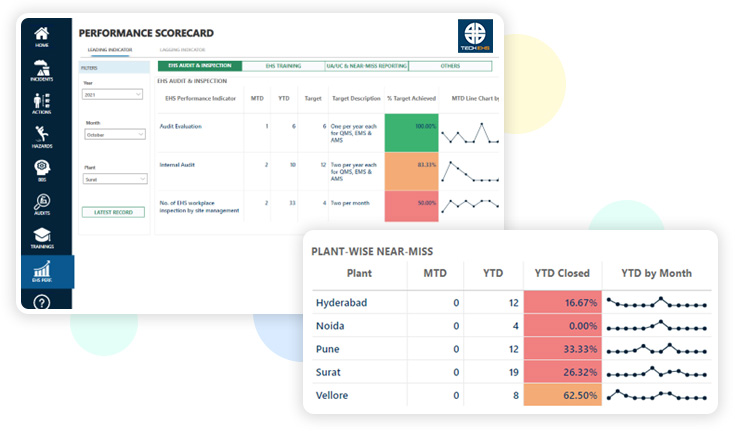
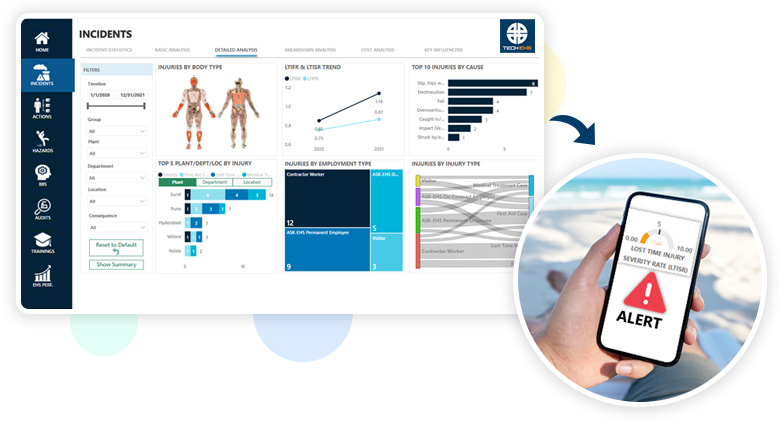
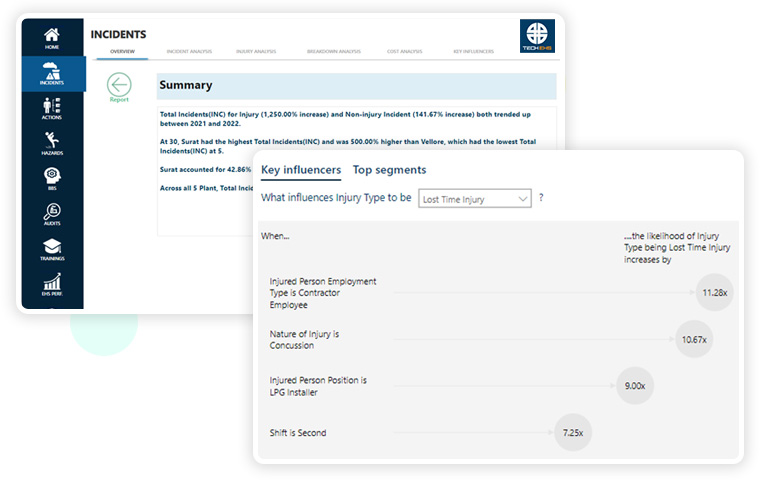
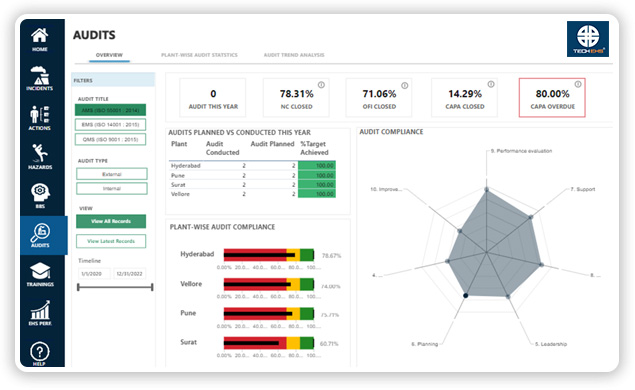
Using BI and an integrated safety analytics dashboard, EHS professionals can gain actionable insights from their data to identify and mitigate risks, improve compliance, and reduce operational costs. A comprehensive EHS dashboard helps organizations monitor incidents, audits, inspections, training status, and corrective actions in real time.
An intelligent EHS KPI dashboard empowers both leadership teams (C-suite executives such as CEOs and VPs) and plant/site teams (Managers and frontline Supervisors) to effectively track business performance at the site level. A centralized workplace safety dashboard also helps EHS teams make quick, data-driven decisions to drive safer outcomes, mitigate risks, improve compliance, and reduce costs.

Get Actionable Trend Insights
Analyze EHS Performance Scorecard

KPI’s to Optimize Internal Processes

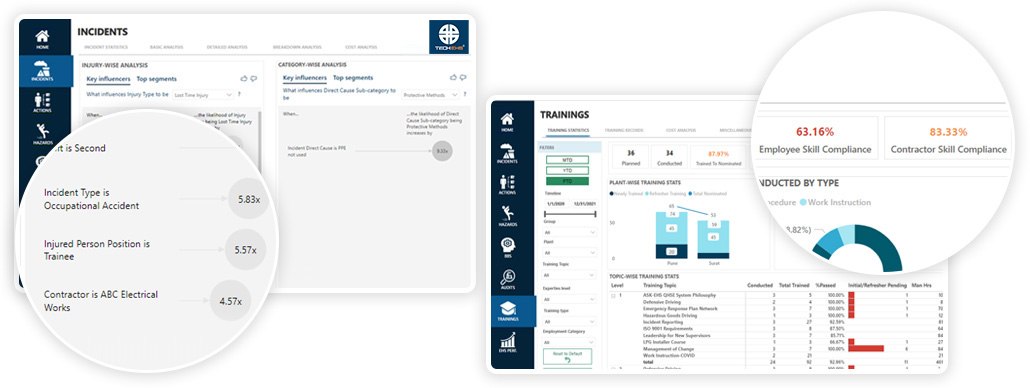
AI-Powered Advance Analytics

Boost Operational Efficiency

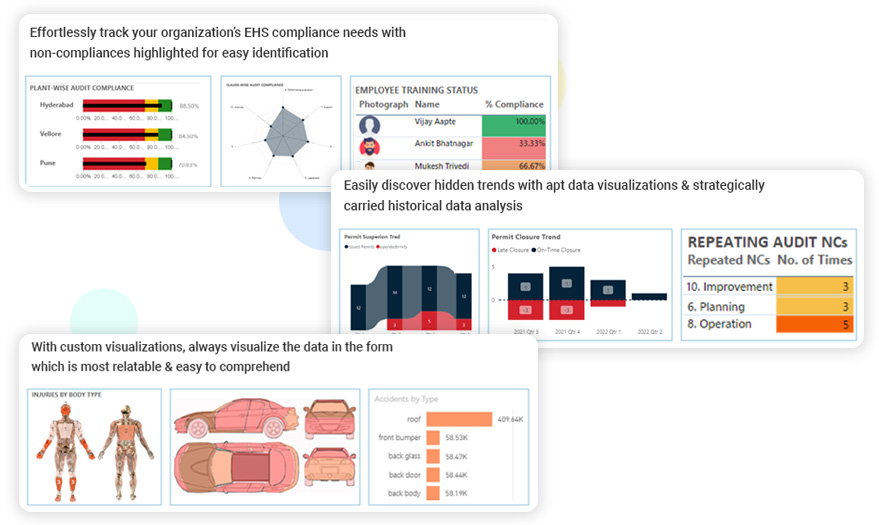
Powerful Descriptive Analytics and Compelling Data Visualizations

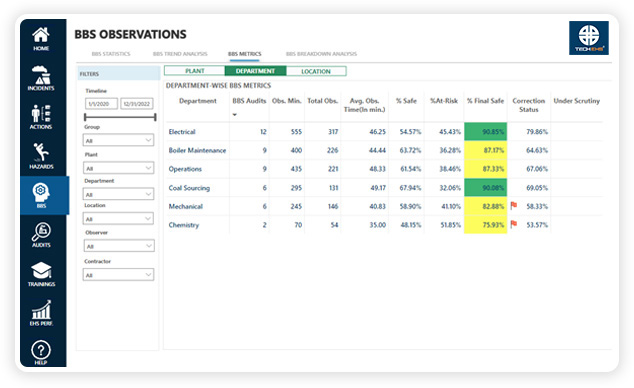
Set Critical-To-Safety Targets and Leverage BI Capabilities to Auto-Highlight Progress


Benefits
Demonstrating expertise in EHS and Business Intelligence domains, leveraging specialized knowledge to produce actionable insights
Our Success Stories

Renewable Energy Companies


Inspiring Stories
Testimonials from Industry Pioneers
“Our experience with the implementation process has been excellent. The team’s deep understanding of HSE activities ensures a smooth transition. They quickly grasp our expectations and industry-specific requirements, making the process efficient and well-structured.Beyond the software, the support team has been outstanding. Any significant issues are addressed within hours, and continuous improvements are made whenever necessary. Overall, we’re extremely satisfied with the team’s responsiveness, expertise, and flexibility. The solutions provided have not only met but exceeded our expectations, driving real change in our safety management processes.”
TECH EHS has been a great partner in accelerating and elevating our EHS journey. With “a click of a finger,” the platform could retrieve and present any useful information or data. Additionally, the mobile application provided ease of use for anyone to record any incident or observations for further investigations instantly. Their expertise and commitment to our needs have been evident in delivering solutions through the software and support rendered. We appreciate their continuous efforts to improve the software and adapt to our evolving needs.
We needed a customized solution, as the sheer scale of our operations demanded accurate estimates of scaffolding equipment and manpower. Older methods resulted in significant time delays to scaffolding operations. Through our close discussions, TECH EHS proposed a workflow for SMS that fitted the bill, perfectly. Ultimately, this led to an overall reduction in delays and a streamlined scaffolding lifecycle.
TECH EHS Team is knowledgeable in solving and giving suggestions to the E-PTW and WMS system that we worked with. They illustrate the benefits of using the e-system and give us confidence to continue the business with them. We have a new experience to work together with suppliers overseas and are glad to manage the time well and able to complete the projects on time. We appreciate and value your support and service. Looking forward to having the next project soon!
We were looking for a competent solution for our scaffolding operations spanning multiple sites. Scaffolding management system offered us the ability to shift from a basic to digitalised all-in-one platform.This has enabled efficient scaffolding operations providing inspected and safer material, effortlessly. What helps our case even more is the software availability in local language (Chinese) and English.
One of the advantages of awarding the contract to TECH EHS is that they have expertise in the field and they are easily able to understand our requirements with very minimal consultation. It would be easy for us to roll out the projects within the stipulated time. We have partnered with TECH EHS for many animation projects, software project and continue to use their services to this day. The net result of our association has been very fruitful and productive. Keep it up TECH EHS!
We wholeheartedly endorse TECH EHS Solutions. Their team brings an exceptional depth of knowledge and consistently impresses us with their ability to understand even the most complex EHS challenges. What stands out is how they tailor their solutions so precisely to our needs. Working with them has been both reassuring and impactful.
It was a wonderful journey with TechEHS team from past 4 years and I am recommending TECH EHS software tool to everyone for effective implementation of EHS Management system. We appreciate entire team of TECH EHS for their co-operation and respond to our queries very quickly.
The TECH EHS team had a well-structured platform, simplifying adaption. The system meticulously covers incident tracking, control measures, and responsibilities. We can access complete records with single click. A special thanks to implementation team for their outstanding support

The Permit to Work software from TECH EHS has transformed the way we manage safety at our site. Our productivity has significantly improved!! The digital dashboard helps us plan more effectively, while summary reports enhance our daily preparedness. The implementation was smooth, thanks to your team’s hands-on support and practical training. Any challenges were quickly addressed with proactive follow-up.
TECH EHS has been a professional, responsive, and valuable partner throughout our collaboration. Your deep industry insight truly shows in the quality of both your product and service!!
Our Clients