
Table of Contents
Introduction
Summers are in full swing, and so is one of the most ignored workplace hazards of all: work-related heat stress.
Heat stress is not a condition specific to any field; it can affect anyone, whether you work on a Construction site, in a factory, a warehouse, or a commercial kitchen, or even in an office with poor ventilation. But employees are mostly unaware until it is too late.
According to the US Occupational Safety and Health Administration (OSHA), heat stress is among the top four categories of illness and injury workers face, particularly during hot-weather months. In fact, OSHA heat inspections have risen from 0.5% of all federal-level agency inspections five years ago to 6% over the last five years.
The good news? You can prevent heat stress at work, but only if you know the signs.
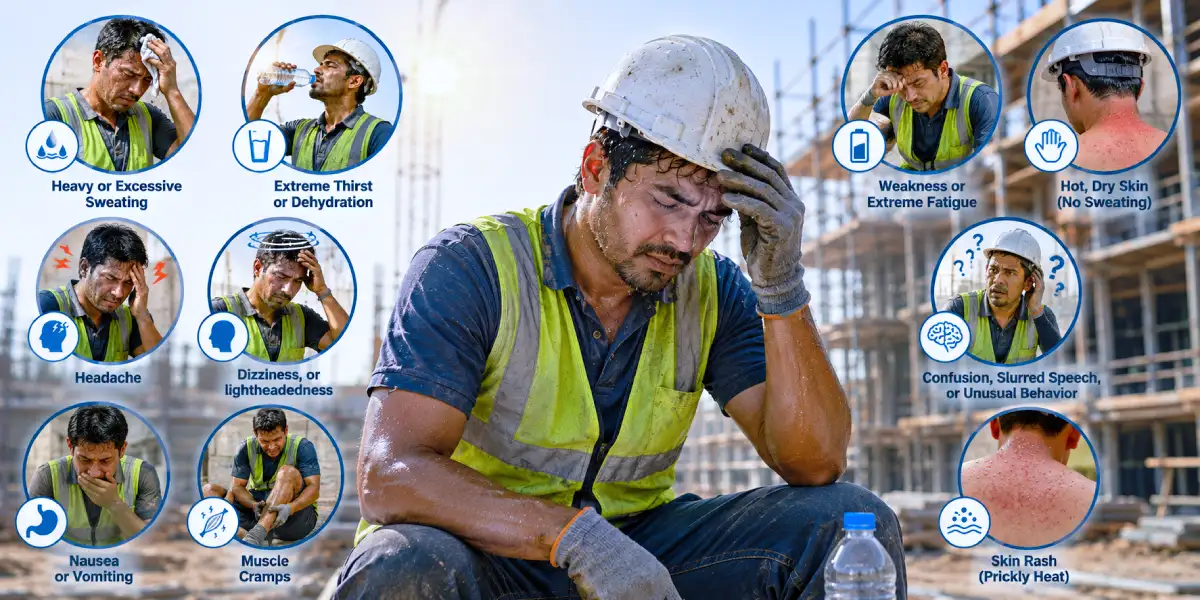
In this blog post, we will help you recognize the 10 critical symptoms of heat stress every worker needs to know about, along with what to do when you see them.
What Is Heat Stress?
Heat stress occurs when the body absorbs more heat than it can dissipate. In hot, humid environments, especially during physically demanding work, your body’s natural cooling system can become overwhelmed. Normally, your body cools itself by sweating.
OSHA says any job or process that raises a worker’s core body temperature above 100.4°F (38°C) puts that worker at risk of heat stress. This includes
Outdoor jobs in hot weather (building, farming, road work)
Indoor work in the vicinity of heat sources (foundries, bakeries, kitchens, laundries)
Jobs with heavy protective clothing or gear
The scary thing? Heat Stress is More than Just Feeling Uncomfortable. If untreated, it can progress to heat exhaustion and even heat stroke, a life-threatening emergency.
Why understanding heat stress at work is important
Many workers soldier on through discomfort, telling themselves they are simply “tired” or “dehydrated.” But if you miss the early signs of heat stress, it can have serious health consequences, and in extreme cases, death.
In a 2021 study, the Bureau of Labor Statistics found that thousands of workers in the United States contract occupational heat illness each year. The numbers are much higher worldwide.
Recognizing heat stress warning signs in yourself and your coworkers is one of the most valuable safety skills you can have on the job.
10 Signs of Heat Stress
1. Heavy or Excessive Sweating
Sweating is the body’s main defense against heat. But heavy sweating that soaks through clothing quickly is one of the first signs of heat stress on the job.
If you or your colleague is sweating buckets more than usual, particularly in the first hour of work, it’s a sign the body is working overtime to cool down. Don’t pass this up.
What to do: Move to a cooler place, drink water, and rest.
2. Extreme Thirst or Dehydration
Extreme thirst is your body telling you it is losing fluid faster than it can replenish it. OSHA warns, however, that thirst is not a reliable indicator of hydration. By the time you feel thirsty, you may already be dehydrated.
OSHA recommends drinking a cup of cool water every 20 minutes in hot work environments, even if you do not feel thirsty.
| Hydration Sign | What it means |
|---|---|
| Pale/clear urine | Well hydrated |
| Dark yellow urine | Mildly dehydrated |
| Brown/no urine | Severely dehydrated, seek help |
What to do: Drink water regularly throughout your shift. Don’t have alcohol or caffeinated drinks.
3. Headache
A throbbing headache during or after work in a hot environment is a classic early sign of heat stress. It usually occurs because of dehydration and reduced blood flow to the brain as the body diverts resources to cool itself down
If you suddenly get a headache on a hot workday, don’t just put it down to stress or fatigue. It can be your body’s first alarm bell.
What to do: Rest in a cool place, drink water, and watch how you feel. If it gets any worse, see your doctor.
4. Dizziness, or lightheadedness
If you feel dizzy or like the room is spinning around you? That is a serious kind of heat stress warning sign, and it really shouldn’t be ignored, especially if you’re operating machinery or working at heights.
OSHA notes that dizziness in the heat can progress to heat collapse, also called fainting, in which the brain doesn’t get enough oxygen because blood pools in the extremities. It can be risky and kind of unpredictable, too.
What to do: Sit or lie down right away in a cool place. Don’t try to “walk it off” or push through it. Let a supervisor know immediately.
5. Nausea or Vomiting
Feeling nauseous or actually vomiting while doing hot work is a pretty clear signal that your body is dealing with significant heat stress. This symptom is usually associated with heat exhaustion, the phase that precedes heat stroke.
If an employee starts feeling off, like sick to the stomach, in a hot area, it’s time to stop work at once and get help right away.
What to do: Move the person out of the hot zone. Give cool water in small sips, not big gulps. If you have them, use ice packs on the neck, the armpits, and the groin. If vomiting keeps going, call for medical assistance immediately.
6. Muscle Cramps
Sudden, painful muscle cramps, especially in the legs, arms, or even the stomach, are a warning sign often called “heat cramps.” These usually occur due to an electrolyte imbalance caused by excessive sweating.
OSHA notes that heavy perspiration removes not only water but also salts and other electrolytes. With that kind of imbalance, muscles can cramp and spasm, especially during physical activity or right after it ends.
What to do: Take a break, rest, and stretch gently. Drink water or choose fluids that replace electrolytes. Some recent research also suggests that carbohydrate-electrolyte drinks may help people recover from heat cramps more quickly.
7. Weakness or Extreme Fatigue
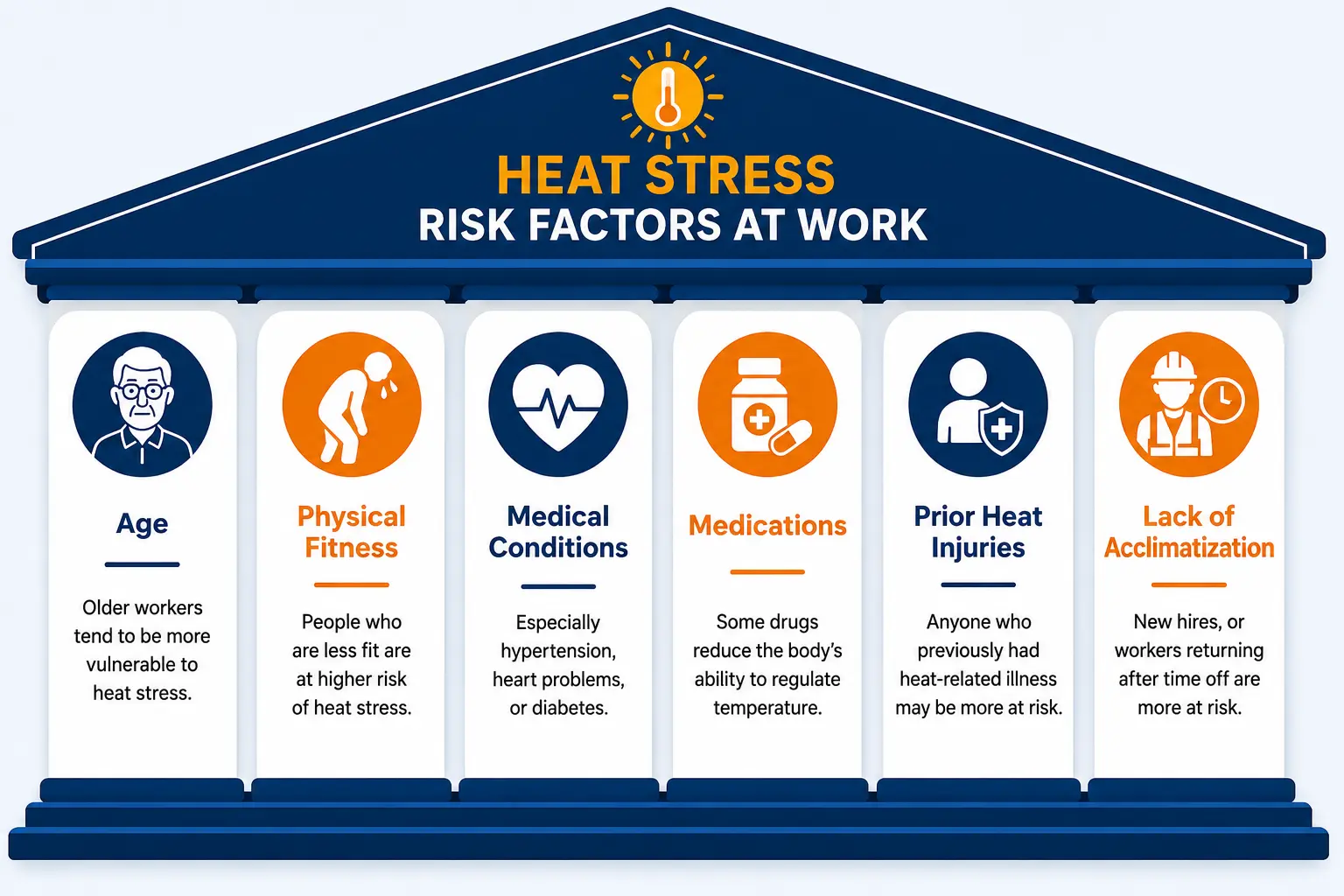
If you suddenly feel weirdly weak, worn out, or like you can’t match your usual work pace, that’s one of the clearest heat stress warning signs. People call this heat fatigue, and it usually shows up when you haven’t acclimatized enough—like the body hasn’t had proper time to adjust to hot job site conditions.
Heat fatigue can mess with your physical stamina and also your brain, which can bring on mistakes, accidents, and even injuries while you’re working.
What to do: take a break in a cool setting. If you’re new to working in hot conditions, you should be gradually acclimatized over a few days. OSHA suggests starting at about 20% heat exposure on day one, then increasing it by about 20% each day.
8. Hot, Dry Skin (No Sweating)
This is a warning sign a lot of folks don’t even realize is a big deal—and it’s one of the scarier ones.
If someone has been working in the heat, suddenly stops sweating, and their skin turns hot, dry, and stubbornly so, that’s a major red flag for heat stroke, the harshest form of heat stress on the job. At that point the body’s cooling system is basically failing or shut down.
Other heatstroke signs include the following:
OSHA treats heat stroke like a medical emergency. Call emergency services right away.
What to do: move the person to a cool area, remove outer clothing, wet their skin, and gently fan them to help evaporation. Don’t leave them alone, and don’t let them head home without medical clearance.
9. Confusion, Slurred Speech, or Unusual Behavior
If a coworker suddenly seems confused, slurs their speech, acts oddly, or doesn’t respond the way they normally would—don’t assume they’re just tired or messing around. This can progress from heat stress to heat stroke.
Heat can throw off brain function. When core temperature climbs too high, the brain may start malfunctioning. That can look like irrational choices, poor coordination, and, in difficult situations, fainting or loss of consciousness.
What to do: treat it like an emergency. Get immediate help, move them to a cooler space, and begin cooling measures while waiting for medical support.
10. Skin Rash (Prickly Heat)
Red bumps or a prickly rash—especially where clothing fits tightly—can be heat rash, also called prickly heat. Even though it sounds mild, it’s actually a sign that the skin stays wet with sweat that can’t evaporate. In other words, the body’s cooling mechanisms are becoming overwhelmed.
OSHA says heat rash is the most common issue in hot work settings. If it’s ignored, those little papules can become infected.
What to do: get them into a cooler, drier environment. Keep the skin clean and dry. Use loose, breathable clothing. Usually, the rash fades once the person is out of the heat.
Quick Reference: Heat Stress Warning Signs at a Glance
| Warning Sign | Severity Level | Immediate Action |
|---|---|---|
| Excessive sweating | Early | Rest and hydrate |
| Intense thirst | Early | Drink water regularly |
| Headache | Early–Moderate | Rest in a cool area and hydrate |
| Dizziness | Moderate | Sit/lie down, alert supervisor |
| Nausea/vomiting | Moderate–Severe | Cool area, ice packs, call help |
| Muscle cramps | Moderate | Rest, electrolyte fluids |
| Weakness/fatigue | Moderate | Cool area, rest |
| Hot dry skin | SEVERE — Heat Stroke | Call emergency services |
| Confusion/slurred speech | SEVERE — Heat Stroke | Call emergency services |
| Skin rash | Mild–Moderate | Cool, dry environment |
What Employers Must Do – OSHA’s Requirements
Under the OSH Act, employers have a legal duty to provide a workplace that’s free from recognized hazards, and heat is absolutely recognized as one of those hazards.
OSHA recommends employers take steps like:
FAQs
