

Top 10 Benefits of HAZOP Study for Safer Industrial Operations

Table of Contents

Introduction

Industrial facilities operate in very complex and hazardous environments, where even a small deviation from normal operations can result in catastrophic accidents, equipment failures, environmental damage and loss of production. Industries such as oil & gas, petrochemicals, pharmaceuticals, chemicals, power generation, and manufacturing continuously face process safety challenges due to high-pressure systems, flammable materials, and interconnected operations.

That is why it has become imperative for modern industries to do a HAZOP study. A HAZOP hazard and operability study is one of the most effective process safety methodologies used for identifying hazards, evaluating operational risks, and improving industrial safety performance. By systematically reviewing process deviations, industries can prevent incidents before they occur. Today, organizations worldwide are investing more in professional hazard and operability studies HAZOP, to strengthen compliance, improve plant reliability, and build a safer work environment.

In this blog, we will explore:

  • What is a HAZOP study?
  • HAZOP meaning and methodology
  • Top 10 benefits of conducting a HAZOP study
  • A practical HAZOP example
  • Importance of hazard and operability analysis
  • Why industries choose TECH EHS Solution for HAZOP studies

What is a HAZOP Study?

A Hazard and Operability Study (HAZOP) is a systematic risk assessment methodology used to identify potential hazards and operational issues in industrial processes.

The main purpose of a hazard operability study HAZOP is to examine process deviations from intended operating conditions and determine:

  • Possible causes
  • Potential consequences
  • Existing safeguards
  • Recommended corrective actions

The study is conducted by a multidisciplinary team consisting of:

  • Process engineers
  • Operations personnel
  • Instrumentation experts
  • Safety professionals

A professional hazop analysis typically reviews:

  • Piping and Instrumentation Diagrams (P&IDs)
  • Process Flow Diagrams (PFDs)
  • Operating procedures
  • Design parameters

HAZOP Meaning

HAZOP stands for:

  • HAZ = Hazard
  • OP = Operability

The hazop meaning focuses on identifying:

  1. Hazards that could impact safety, health, and the environment
  2. Operability issues that could affect productivity and system performance

The methodology uses predefined guidewords such as:

  • No
  • More
  • Less
  • Reverse
  • As Well As
  • Other Than

These guidewords help identify abnormal process conditions and hidden risks within industrial systems.
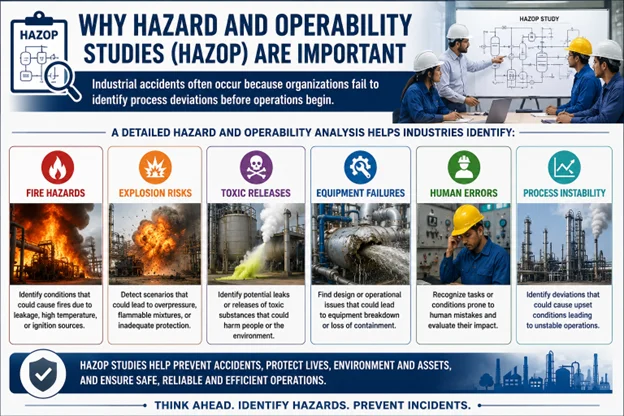
Why Hazard and Operability Studies (HAZOP) Are Important

Hazard and Operability Studies

Without proper hazard operability studies, companies may face:

  • Operational shutdowns
  • Regulatory penalties
  • Environmental incidents
  • Financial losses
  • Damage to reputation

This is why HAZOP studies are considered one of the most critical components of Process Safety Management (PSM).

10 Benefits of Conducting a HAZOP Study

1. Identifies Process Hazards Before Accidents Occur

The primary benefit of a HAZOP study is early hazard identification.

A systematic Hazop analysis identifies:

  • Pressure deviations
  • Temperature abnormalities
  • Chemical incompatibilities
  • Flow failures
  • Equipment malfunctions
  • Instrumentation issues

This proactive approach helps industries prevent catastrophic incidents before they occur.

2. Improves Workplace and Process Safety

A professional hazard operability study HAZOP improves:

  • Worker safety
  • Equipment protection
  • Emergency preparedness
  • Process reliability

Industries can implement:

  • Safety interlocks
  • Alarm systems
  • Shutdown procedures
  • Pressure relief devices
  • Fire protection systems

This significantly reduces workplace accidents and process failures.

3. Enhances Regulatory Compliance

Regulatory authorities require industries to conduct proper risk assessments and process safety reviews.

A detailed hazard and operability analysis supports compliance with:

  • OSHA Process Safety Management (PSM)
  • ISO safety standards
  • Environmental regulations
  • Factory safety guidelines

Regular hazard and operability studies HAZOP help organizations demonstrate compliance and reduce legal risks.

4. Reduces Downtime and Production Losses

Unexpected shutdowns can result in significant financial losses.

A detailed Hazop analysis identifies:

  • Equipment reliability issues
  • Utility failures
  • Process bottlenecks
  • Control system problems

This helps industries:

  • Improve operational continuity
  • Reduce maintenance costs
  • Minimize downtime
  • Increase plant productivity

5. Improves Process Reliability and Efficiency

Efficient operations are usually safer operations.

A well-conducted hazard operability study review identifies:

  • Process instability
  • Design weaknesses
  • Recurring equipment failures
  • Inefficient operating conditions

Industries can optimize systems and improve long-term operational efficiency.

6. Reduces Human Errors and Procedural Gaps

Human error is a major contributor to industrial incidents.

A professional hazard and operability study (HAZOP) evaluates:

  • Incorrect procedures
  • Operator mistakes
  • Communication failures
  • Inadequate training
  • Maintenance errors

Organizations can then improve:

7. Strengthens Safety Culture

A HAZOP study encourages collaboration between departments, including:

  • Operations
  • Engineering
  • Maintenance
  • Safety teams
  • Process understanding
  • Risk awareness
  • Employee participation
  • Safety accountability

This improves:

Strong safety culture directly contributes to operational excellence.

8. Supports Better Risk-Based Decision Making

Modern industries rely heavily on risk-based operational strategies.

A detailed hazop analysis provides insights into:

  • Risk severity
  • Failure probability
  • Existing safeguards
  • Required corrective actions

This helps management prioritize:

  • Safety investments
  • Process upgrades
  • Maintenance planning
  • Risk mitigation measures

9. Protects Company Reputation and Sustainability

Major industrial incidents can severely impact brand reputation and business continuity.

Regular hazard operability studies demonstrate a company’s commitment to:

  • Worker safety
  • Environmental responsibility
  • Operational excellence
  • Sustainable business practices

This improves trust among:

  • Clients
  • Employees
  • Investors
  • Regulatory authorities

10. Supports Continuous Improvement in Process Safety

A hazard and operability analysis is not a one-time activity.

Organizations regularly conduct:

Continuous improvement helps industries:

  • Adapt to operational changes
  • Improve safeguards
  • Address emerging risks
  • Maintain long-term safety performance

Industries That Require Hazard Operability Studies

The following industries commonly perform hazard and operability studies HAZOP:

Industry Why HAZOP is Important
Oil & Gas Prevents explosions and gas leaks
Petrochemical Plants Improves process safety
Chemical Manufacturing Controls toxic chemical risks
Pharmaceuticals Maintains stable production
Power Plants Prevents operational failures
Mining Industry Reduces hazardous risks
Food Processing Improves safety and reliability
Infrastructure Projects Enhances industrial risk management

Future of HAZOP Analysis in Industrial Safety

Future of HAZOP Analysis in Industrial Safety

The future of hazop analysis is evolving rapidly with:

  • AI-driven risk assessment
  • Predictive analytics
  • Digital twins
  • Smart monitoring systems
  • Real-time process safety tracking

Industries are integrating digital technologies with traditional hazard operability studies to improve operational resilience and process visibility.

Why Choose TECH EHS Solution for HAZOP Studies

TECH EHS Solution is one of India’s leading EHS and process safety consulting organizations offering advanced process risk assessment services for high-risk industries.

TECH EHS Services Include:

  • HAZOP Study
  • Process Hazard Analysis (PHA)
  • Quantitative Risk Assessment (QRA)
  • Layers of Protection Analysis (LOPA)
  • Safety Integrity Level (SIL)
  • Process Safety Gap Analysis
  • PSSR
  • RBI
  • FMEA

Conclusion

A HAZOP study is one of the most effective tools for identifying industrial process hazards and improving operational safety.

From preventing accidents and reducing downtime to improving compliance and operational reliability, the benefits of conducting a professional hazard and operability analysis are enormous for every high-risk industry.

As industrial operations become more complex, organizations must adopt proactive process safety strategies through structured hazard operability studies.

Companies that invest in regular hazard and operability studies HAZOP not only protect their workforce and assets but also improve long-term business sustainability and operational excellence.

If your organization is looking to strengthen process safety and operational reliability, partnering with experts like TECH EHS Solution can help you implement industry-leading HAZOP and process safety solutions tailored to your operational requirements.


FAQs

A HAZOP study (Hazard and Operability Study) is a systematic process safety method used to identify hazards, operational risks, and process deviations in industrial systems before incidents occur.


A HAZOP study helps industries improve process safety, reduce operational risks, prevent accidents, strengthen compliance, and improve plant reliability.


HAZOP studies are commonly used in high-risk industries such as oil & gas, petrochemicals, pharmaceuticals, chemical manufacturing, power plants, mining, and manufacturing.


The main benefits include hazard identification, improved workplace safety, regulatory compliance, reduced downtime, better operational efficiency, and stronger risk management.


A HAZOP study should be conducted during plant design, process modifications, facility expansions, or periodic revalidation to maintain process safety and compliance.


{ "@context": "https://schema.org", "@type": "FAQPage", "mainEntity": [{ "@type": "Question", "name": "1. What is a HAZOP study?", "acceptedAnswer": { "@type": "Answer", "text": "A HAZOP study (Hazard and Operability Study) is a systematic process safety method used to identify hazards, operational risks, and process deviations in industrial systems before incidents occur." } },{ "@type": "Question", "name": "2. Why is a HAZOP study important?", "acceptedAnswer": { "@type": "Answer", "text": "A HAZOP study helps industries improve process safety, reduce operational risks, prevent accidents, strengthen compliance, and improve plant reliability." } },{ "@type": "Question", "name": "3. Which industries require HAZOP studies?", "acceptedAnswer": { "@type": "Answer", "text": "HAZOP studies are commonly used in high-risk industries such as oil & gas, petrochemicals, pharmaceuticals, chemical manufacturing, power plants, mining, and manufacturing." } },{ "@type": "Question", "name": "4. What are the key benefits of conducting a HAZOP study?", "acceptedAnswer": { "@type": "Answer", "text": "The main benefits include hazard identification, improved workplace safety, regulatory compliance, reduced downtime, better operational efficiency, and stronger risk management." } },{ "@type": "Question", "name": "5. How often should a HAZOP study be conducted?", "acceptedAnswer": { "@type": "Answer", "text": "A HAZOP study should be conducted during plant design, process modifications, facility expansions, or periodic revalidation to maintain process safety and compliance." } }] }

EHS Software

Our web-based and mobile-ready HSE software solutions are a comprehensive platform for small, mid-size, and large enterprises to streamline EHS processes and standardize information management.

Solve your EHS challenges and streamline safety operations with our help.


About the Author: Purva Mishra

Avatar
Purva Mishra is a seasoned content strategist with years of experience in creating high-impact B2B digital content. She focuses on simplifying complex topics in safety, compliance, and digital transformation. Her work helps organizations translate safety strategy into actionable, scalable solutions.
6.4 min read Views: 12 Categories: Uncategorized

Leave A Comment