
Table of Contents
- Introduction
- Why Are Industrial Safety Videos Important for Workplace Safety
- What are industrial safety videos?
- Different Types of Industrial Safety Videos
- How Industrial Safety Videos Address Common EHS Challenges
- Do Industrial Safety Training Videos Improve Learning?
- What Makes an Effective Industrial Safety Animation?
- How to Measure the Effectiveness of Industrial Safety Videos
- FAQs
Introduction
A safety video doesn’t work just because people watched it. It works when someone proactively spots a hazard, remembers the appropriate action, and makes a safer call when it counts.
If you are a safety professional, you can see the challenge.
You have to explain complex procedures, brief contractors, orient recruits, investigate incidents, and meet training deadlines. Add multiple sites, different languages, changing conditions, and limited time, and even a clear message can become inconsistent by the time it reaches the field.
Then, in the middle of it all, someone asks the inevitable question: “Have we completed the safety training?”
Completion matters, but understanding matters more.
That is where industrial safety videos earn their place. Built around real work, real hazards, and the decisions people face on the job, they become more than just another training asset. They give teams a clear, repeatable picture of what the organization expects safe work to look like.
So the useful question is not, “Do we need more videos?”
It is this: can your people clearly picture safe work before they have to perform it?
Why Are Industrial Safety Videos Important for Workplace Safety
In a report published by the International Labor Organization (ILO), they ascertained that 2.93 million workers die each year from work-related factors. Approximately 395 million workers sustain non-fatal work injuries. These figures show a global challenge that requires stronger prevention, better controls, and effective safety management.
A basic video alone cannot solve a challenge this big. However, a well-designed, customized safety video can help people identify real site hazards, understand complex procedures, and prepare the appropriate response before they work in high-pressure environments.
Picture a maintenance technician about to service a conveyor.
The written procedure sets out the isolation steps, and a toolbox talk reinforces the risks. An industrial safety animation can go one step further: it can show where hazardous energy still exists, the consequences of incomplete isolation, and walk through the correct lockout/tagout (LOTO) process.
It doesn’t replace the procedure, the authorized personnel, or hands-on training. It simply makes the procedure easier to grasp before the job begins.
That is the practical value of industrial safety videos. They convert instructions people read into simulations they can see, discuss, and remember.
Think of a safety video as a rehearsal. The real workplace should never be the first place someone discovers what a critical mistake looks like.
What are industrial safety videos?
Industrial safety videos are visual tools that explain workplace hazards, safe work practices, operating procedures, and emergency responses in a form people can readily follow.
They can use live-action footage, 2D or 3D animation, motion graphics, recorded demonstrations, or interactive scenarios.
The strongest ones are not generic awareness pieces. They target a specific audience, task, risk, or learning objective.
They help answer four essential questions:
Depending on the purpose, a video may support new employee induction, contractor onboarding, permit-to-work (PTW) briefings, equipment operation, incident learning, or refresher training.
The format is secondary. What matters is whether people leave knowing what the hazard is and what they are expected to do about it.
Different Types of Industrial Safety Videos
Different safety problems need different visual treatments. The right choice depends on the work, the risk, and what people need to understand or do differently.
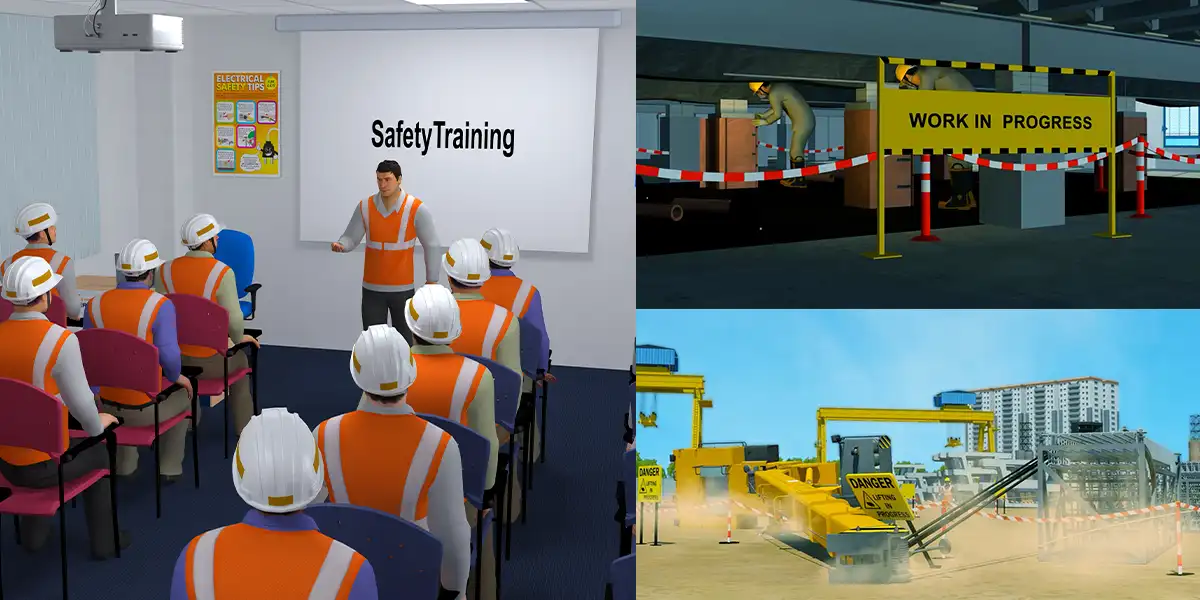
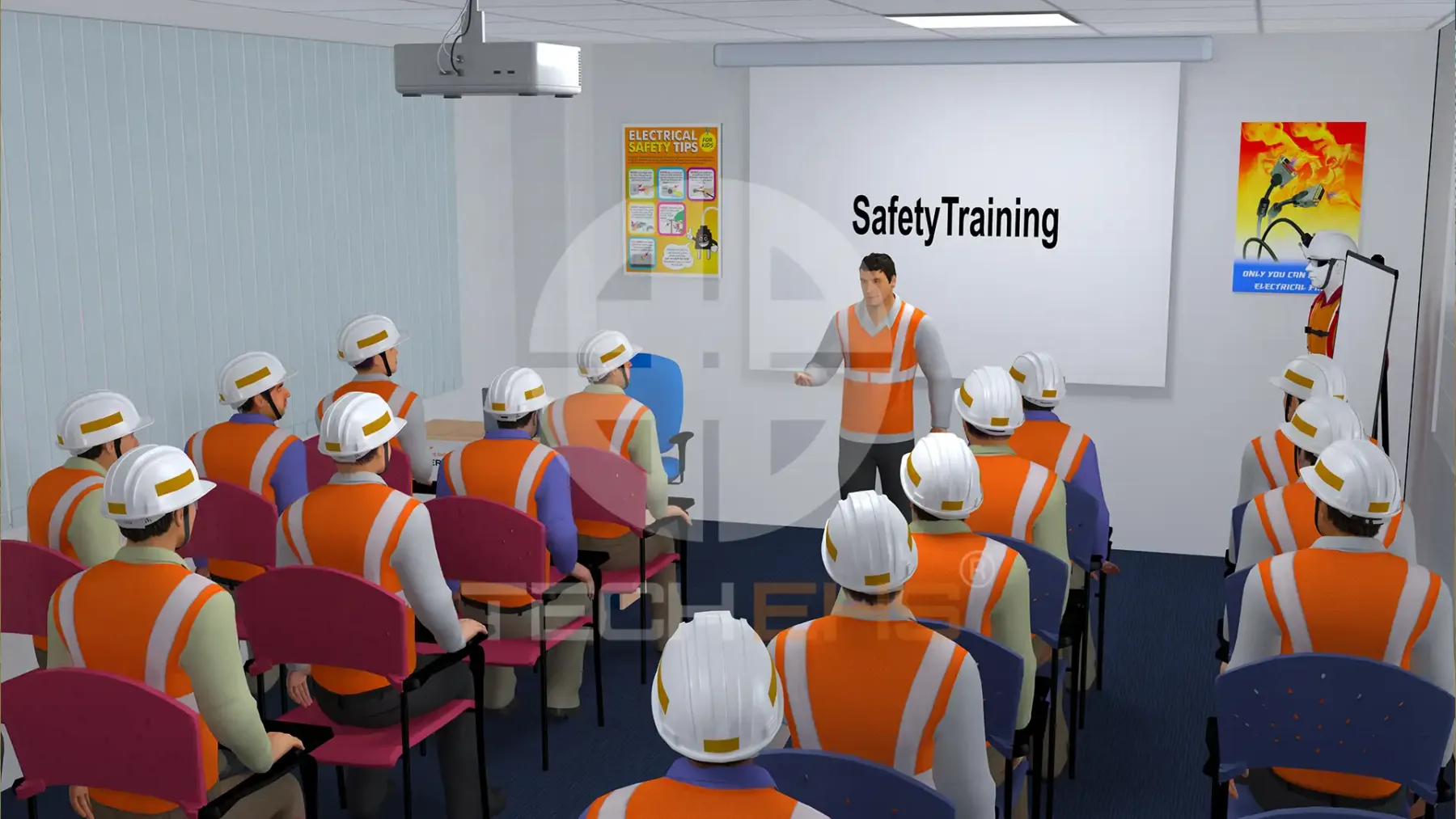
1. Safety orientation or safety induction videos
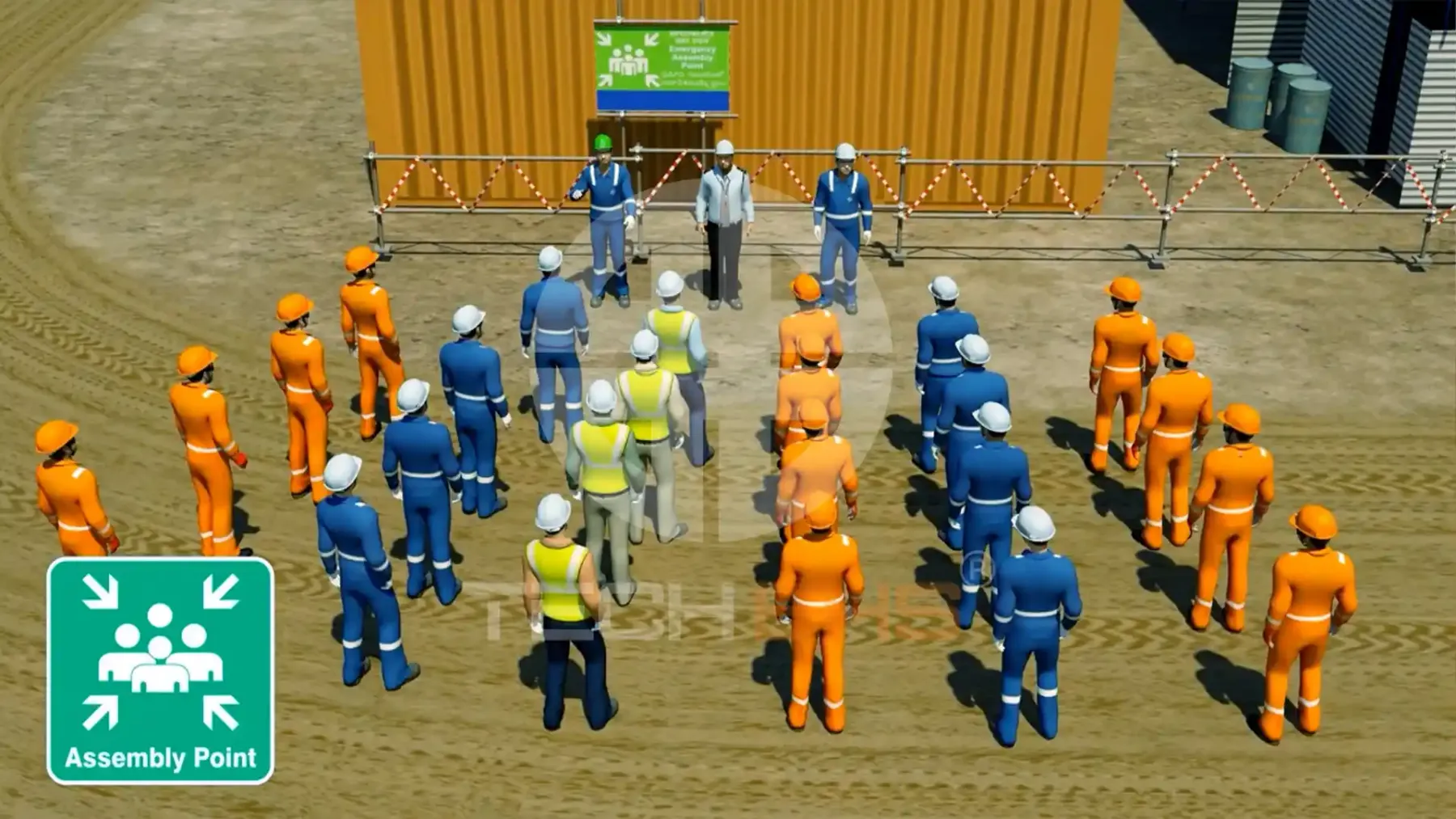
Safety orientation videos give your employees, contractors, and visitors a clear first picture of how the site operates and walk them through the entire plant layout. They demonstrate essential rules, PPE mandates, restricted zones, emergency exits, assembly points, alarm signals, and evacuation routes. A custom-developed video keeps the induction message consistent across shifts, supervisors, and locations.
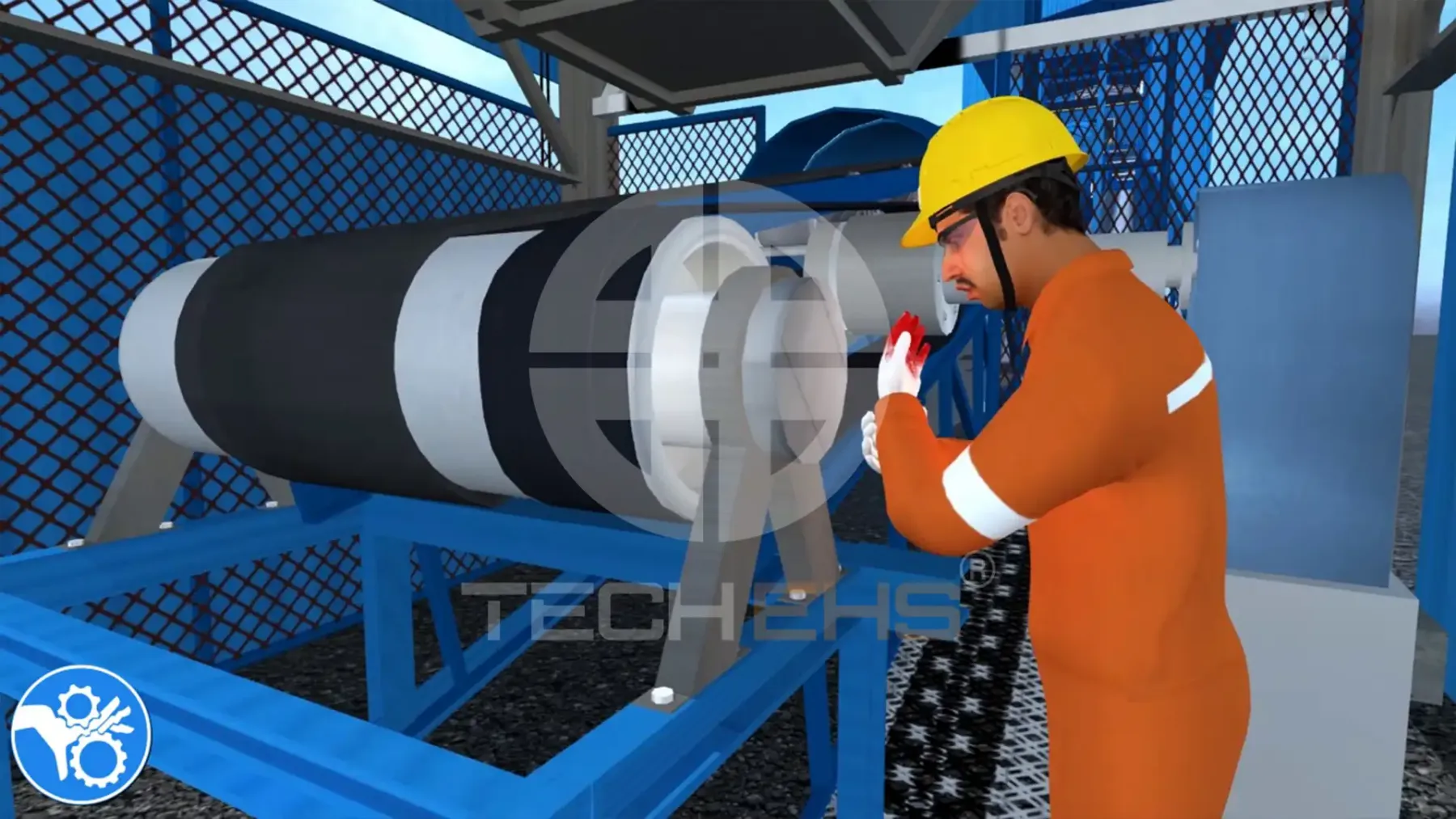
2. Industrial safety animation videos
A video made with 2D and 3D animation can show what CCTV footage cannot capture. It demonstrates movement inside machinery, trapped energy, imperceptible hazards, engineering controls, and operational sequences in detail. It is especially valuable when filming would be unsafe, disruptive, or simply unable to show what workers need to understand.
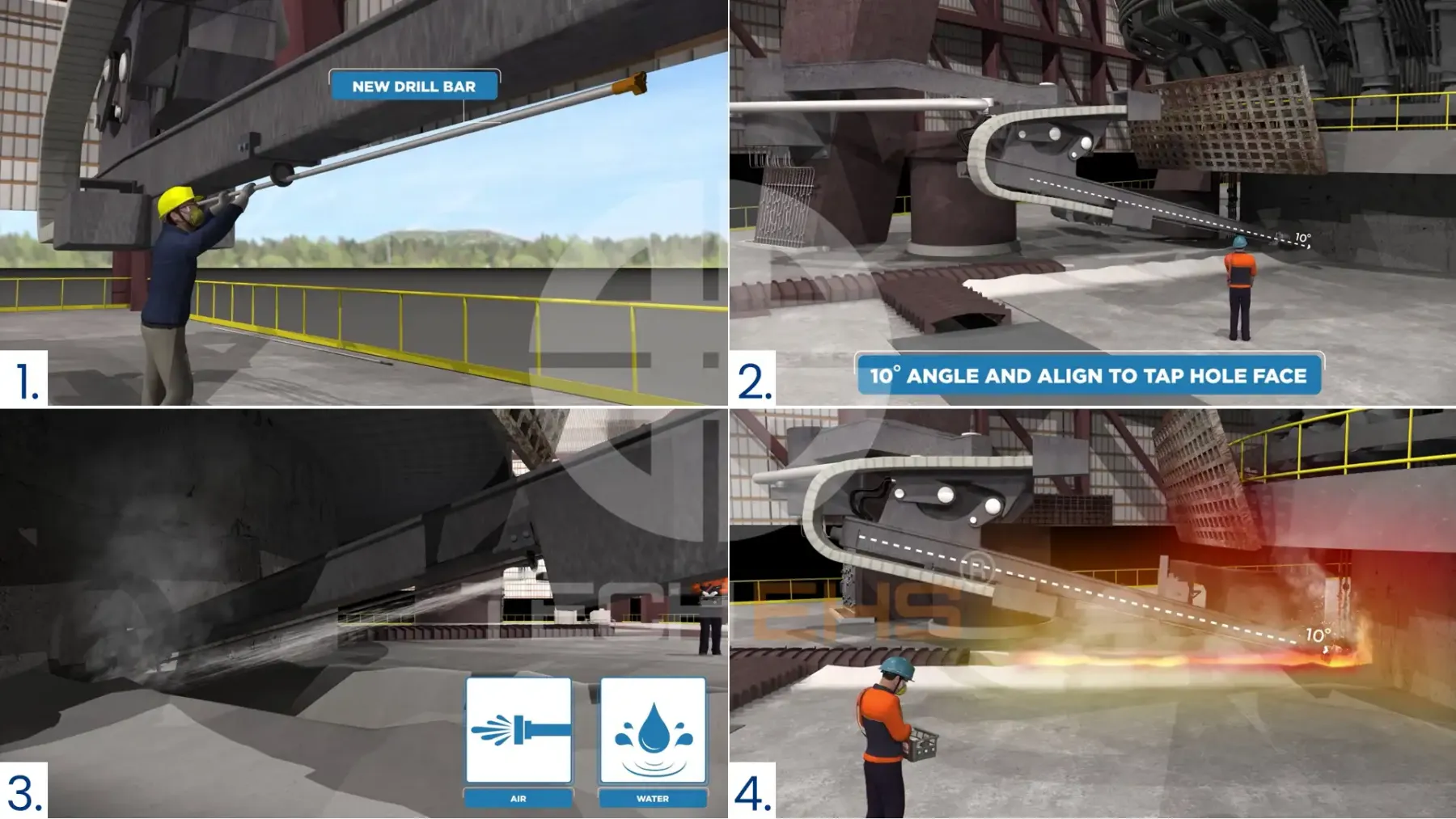
3. SOP and safe work procedure videos
Custom-developed SOP and safe work videos walk people through a job step by step, from preparation and isolation to verification, execution, and safe restoration. They work best as visual tools, supporting approved standard operating procedures (SOPs), job safety analysis (JSA), and job hazard analysis (JHA).
4. Incident scenarios, accident reconstructions, and near-miss recreation videos
Recreating an incident scenario lets teams see how and why something went wrong. It clarifies what happened, what influenced the outcome, and which safety measures fell short. The goal is to learn from real events, not to assign blame. It’s important to stick to the proven facts and keep them separate from guesses or opinions.
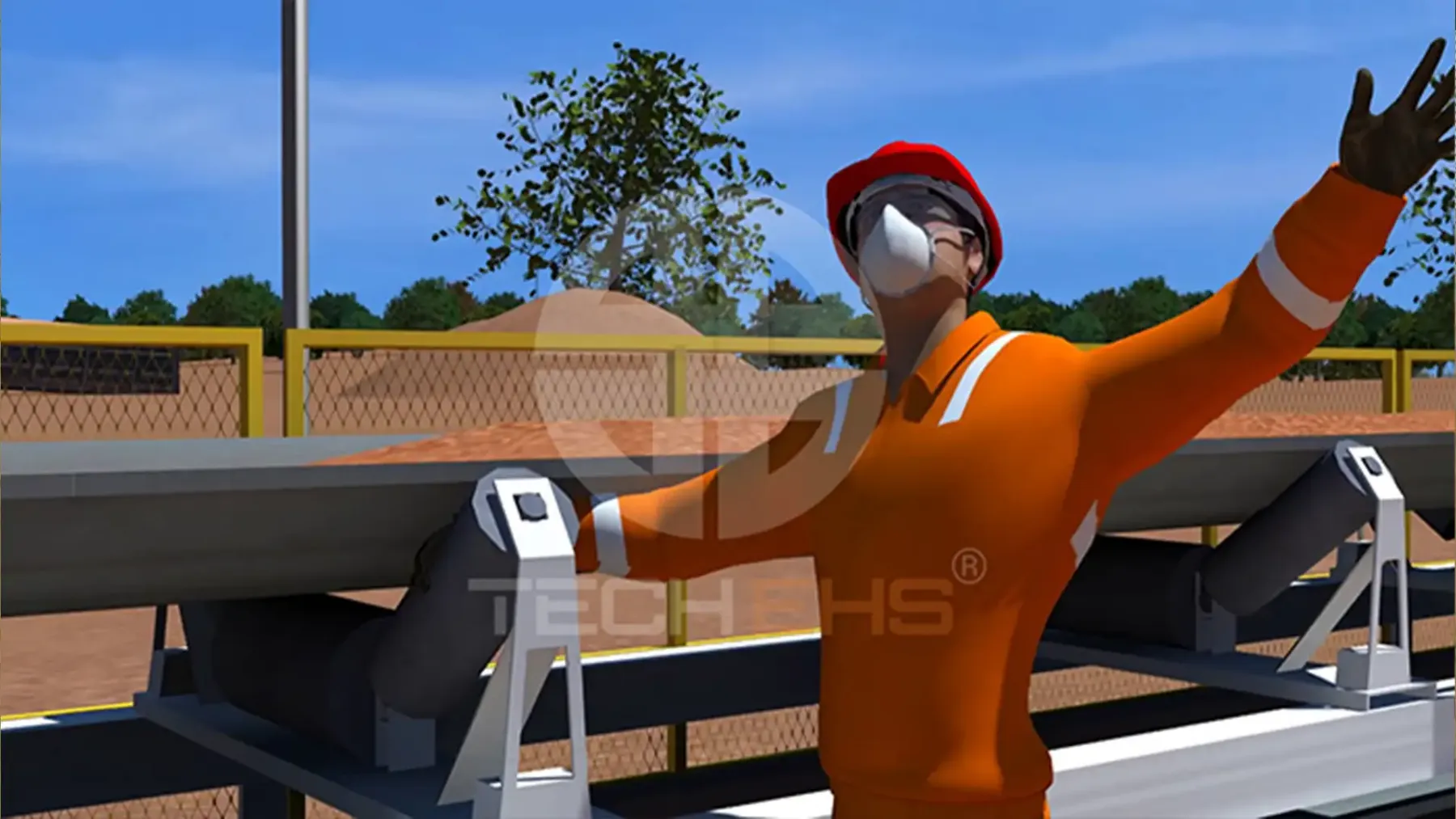
5. Emergency response and hazard awareness videos
These videos essentially demonstrate what people should do during emergencies such as fires, chemical spills, confined-space operations, and other site-specific events. They can make the response easier to picture, but they still need to comply with the emergency plan and be reinforced through drills wherever required.
Other applications include working-at-height training, electrical safety, confined-space entry, process safety, scaffolding, lifting operations, chemical handling, environmental compliance, and contractor safety.
Choose the format because it serves the learning goal, not because it looks impressive in a presentation.
How Industrial Safety Videos Address Common EHS Challenges
Safety teams rarely lack information. The harder part is getting the right message to the right people, at the right moment, and delivering it consistently every time.
These are five common challenges that safety videos can help teams tackle on the job, based on real workplace experience.
1. Inconsistent safety messages across sites
A single procedure can be interpreted differently from one plant or supervisor to the other. A centrally approved video creates a reliable baseline. Local teams can then add site-specific details and take workers through the risks on the floor.
2. Communicating safety to a multi-cultural, multi-lingual workforce
A bespoke industrial safety video can fill gaps that cumbersome instructions fail to address. The videos use narration, readable subtitles, and native versions in the languages workers actually use.
OSHA states that required safety training must be delivered in a language and vocabulary workers can understand. Visual content can support that goal, but it doesn’t eliminate the need to verify comprehension.
3. Repeat safety training and time constraints
A task-specific short video can support a toolbox talk, strengthen an induction, or review key points right before work starts. It also gives people something to return to, rather than relying on what they remember from a single session months ago.
4. Invisible or Complex hazards
Invisible hazards cannot be spotted in normal practice. Animation can safely demonstrate how an operational machine works, show a pressure-release sequence, or demonstrate what happens in case of a missed isolation step without putting anyone in harm’s way.
5. Sharing incident lessons across multiple locations
A serious incident lesson should not stay restricted to the site where it happened. Once you review the facts, a carefully reconstructed video can show other facilities what happened, which controls failed, and what they need to examine in their own work.
One incident can teach one team. A well-designed, visually engaging video can help multiple teams learn from it.
Do Industrial Safety Training Videos Improve Learning?
That is a fair question, especially when budgets are tight and every hour away from operations must be justified.
The research supports occupational safety training, but it equally reinforces an important truth: watching a video isn’t the same as learning a skill.
A systematic review published in the Scandinavian Journal of Work, Environment & Health examined 22 studies and found strong evidence that occupational health and safety training can improve workers’ safety practices. However, the evidence was insufficient to conclude that training alone produces large improvements in health outcomes.
A separate review of 95 studies, involving 20,991 participants, found that more participatory training approaches generally produced better knowledge acquisition and improved safety outcomes than less participatory methods.
So how do EHS leaders benefit from industrial safety videos?
A smart way to ascertain success is not by views or completion rates. Instead, pair the video with:
A video should be one part of the learning system, not the entire system.
What Makes an Effective Industrial Safety Animation?
The best industrial safety animations feel simple because the hard work has happened behind the scenes. They are technically sound, easy to follow, and rooted in a situation workers recognize.
Given below are five qualities to evaluate the effectiveness of an industrial safety animation video:
Good animation is not about adding more effects. It is about making the detail that matters impossible to miss.
A beautifully rendered machine that points to the wrong isolation point is not impressive; it is dangerous. Visual polish matters, but technical accuracy must always win.
How to Measure the Effectiveness of Industrial Safety Videos
Begin with the problem, not the production. Decide what should improve, then measure whether the video helped move it.
| What you want to improve | What to measure |
|---|---|
| Induction consistency | Completion, comprehension, and induction assessment results |
| Hazard recognition | Correct identification of hazards in a scenario |
| SOP compliance | Observed adherence to critical steps |
| Incident learning | Understanding of causes and required corrective actions |
| Training reach | Completion by site, shift, contractor group and language |
| Long-term performance | Relevant leading indicators, audit findings and incident trends |
Where the data allows it, compare what was happening before the video with what happened after it. Then honestly assess other changes that may have driven the result.
If your TRIR or TFIR fall, don’t give the video all the credit. Relevant staffing, equipment condition, supervision, engineering controls, and even reporting habits collectively improve the numbers.
The real test is not whether the video played. It is whether it helped people recognize the risk, choose the right action, and work more safely.
