
Table of Contents
Introduction
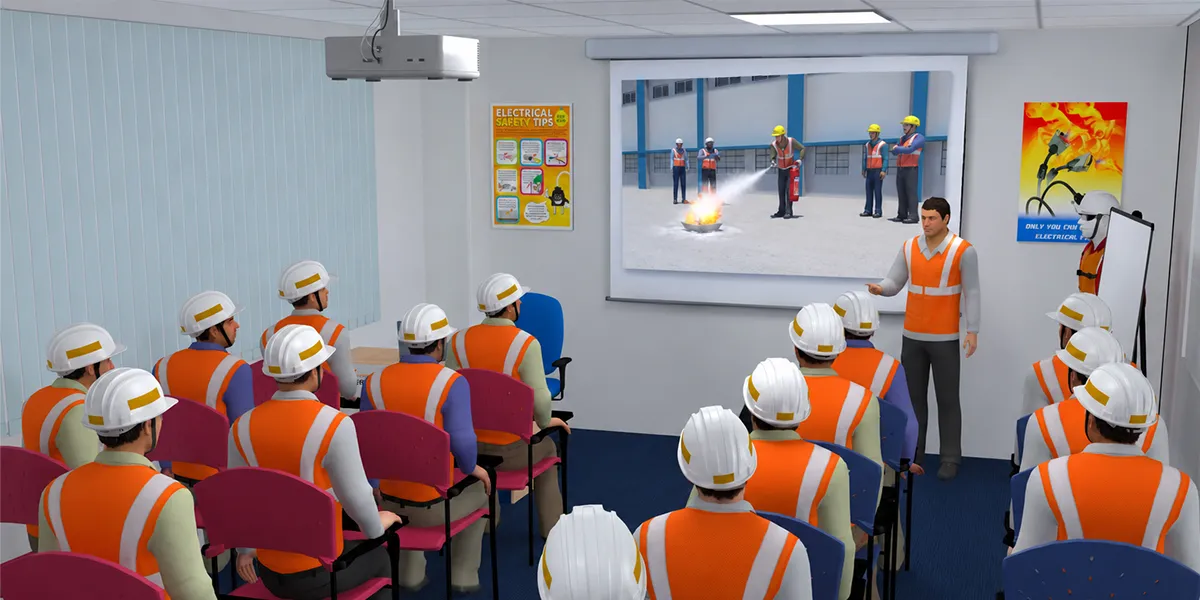
Every morning on industrial sites worldwide, thousands of safety officers step up to conduct the traditional shift-start safety briefing. The intent is noble: align the workforce, address vital hazards, review safe work procedures, and send everyone home safely at the end of the shift.
Yet, any experienced EHS professional knows the quiet struggle that happens during these meetings.
You deliver your best critical briefing on high-risk activities such as a Lockout/Tagout (LOTO) sequence or a complex rigging plan. Unfortunately, you get blank stares, tired nods, and well-mannered silence. A few hours later, a near-miss occurs on the shop floor because someone misapplies or completely forgets a step from the morning review.
Why does this happen?
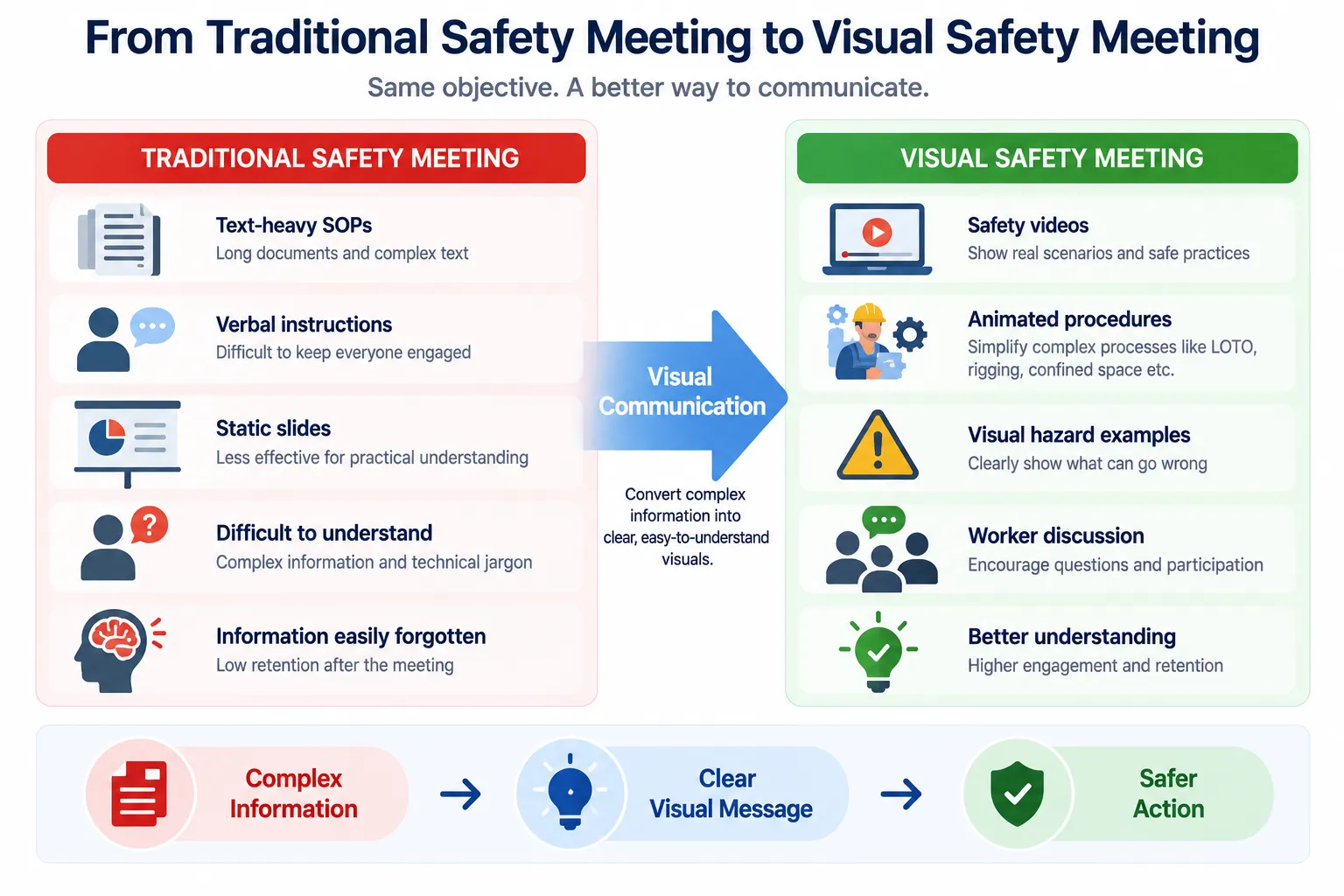
It rarely stems from a lack of effort by the safety team. It is a fundamental breakdown in communication basics. Traditional safety meetings rely heavily on text-dense binders, verbal lectures, or static PowerPoint slides. In busy workplaces with many languages and tired workers, this approach makes it hard for people to understand and remember information.
To move away from compliance to active engagement, EHS leaders are rethinking how they communicate and deliver information. One option is to leverage visual communication. Integrating actual workplace safety videos, animated SOPs, and short visual micro-learning assets into daily toolbox talks bridges the gap between complex compliance language and clear, easy-to-understand visuals.
Let’s explore the framework behind this shift, the technical challenges it solves, and how visual tools reshape daily safety meetings.
The Golden Circle of Visual Safety Communication
To understand why visual tools revolutionize safety meetings, let’s apply Simon Sinek’s ‘Golden Circle’ framework: WHY, HOW, and WHAT.
1. WHY: Protect Human Life and Build a Strong Safety Culture
The fundamental goal of any Health, Safety, and Environment (HSE) department is not to pass an audit or check a compliance box. It is to ensure every worker returns home safely every single day. A sound safety culture relies on workers making the right micro-decisions on the floor when no supervisor is watching. To build that instinct, safety messaging must cross over mental barriers, build empathy, and make hazards undeniably clear.
2. HOW: Convert Complex Technical Information into High-Impact Videos
Text-heavy Standard Operating Procedures (SOPs) and verbal instructions struggle because humans can process visual information very efficiently, and well-designed visuals can help explain processes, relationships, and hazards that are difficult to communicate through words alone. Converting complex engineering processes, hazards, and LOTO steps into site-specific 3D animated videos eliminates confusion. Videos show what ‘safe work’ looks like and what goes wrong when you move away from protocols, instantly removing language barriers.
3. WHAT: Use Site-Specific Safety Videos in Safety Meetings
Organizations can easily integrate short safety videos into shift handover meetings, daily toolbox talks, and contractor pre-job risk assessments. A short 2-minute safety moment video customized to the shift’s scheduled work engages the audience, reinforces dialogue, and drives actionable awareness.
How Do Visuals Solve The Technical Challenges Experienced by EHS Teams?
Safety professionals operate amid complex environments where operational pressure, technical jargon, and workforce diversity are commonplace. Some of the most common questions lingering in their minds include:
- 1“How can I make workers understand the importance of safety during daily morning safety toolbox talks?”
- 2
“What are the best methods to explain Lockout/Tagout (LOTO) procedures to diverse workforces?”
- 3“How do I overcome language barriers in safety briefings for multicultural contractor crews?”
- 4“How are 3D animated videos better than PowerPoint for safety training?”
- 5
“How can safety officers reduce repeatable incident rates?”
- 6“How do I visualize invisible hazards like arc flash boundaries or gas leaks in shift briefings?”
- 7“What are effective ways to share near-miss incident lessons learned without putting workers in danger?”
- 8“How can EHS leaders enhance information retention in daily pre-job hazard assessments?”
- 9“How can micro-learning videos help during industrial workplace safety briefings?”
- 10“How do I make complex SOPs easy for shop floor technicians to understand quickly?”
Standard communication methods frequently break down under the following challenges:
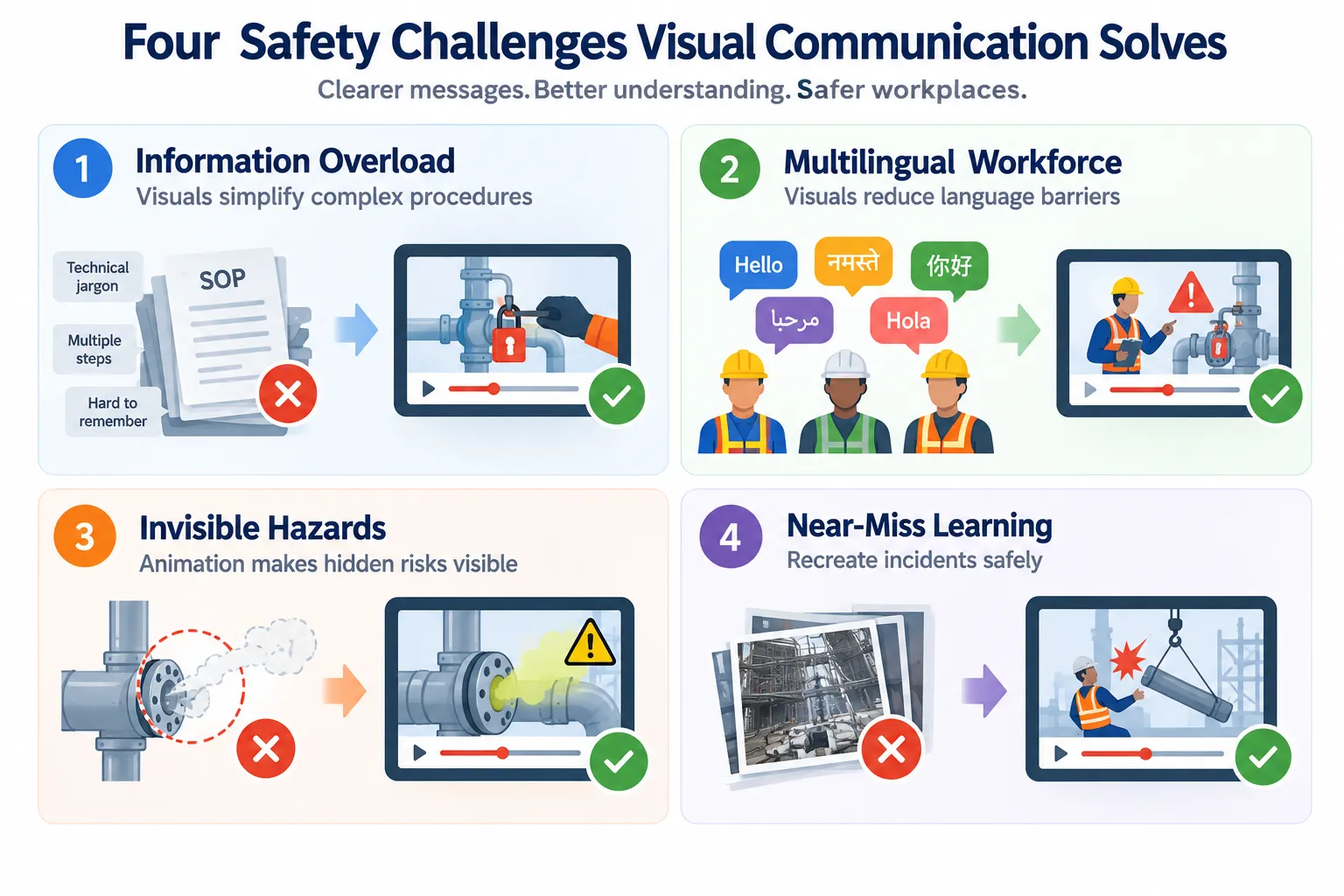
1. The Forgetful Mind and Mental Overload
In a typical shift briefing, workers are infused with technical expressions, numbers, and warning signs. Research on memory, including Ebbinghaus’s classic work, shows that newly learned information can be forgotten rapidly when it is not reinforced or retrieved. However, the rate of forgetting depends on factors such as the material, prior knowledge, attention, and subsequent practice. For safety training, this reinforces the importance of reinforcement, retrieval, and repeated communication rather than relying on a single briefing.
2. Communicating to Multilingual Workforces
Modern construction sites, manufacturing plants, and operational facilities employ contractors with diverse workforces. They speak different languages and have varying literacy levels. Traditional SOPs or single-language communication leave workers confused and at a clear disadvantage, creating serious gaps in hazard awareness.
3. Visualizing “Invisible” and High-Risk Hazards
Many industrial hazards remain invisible to the naked eye until a catastrophic failure occurs. Accidents involve arc flash, pressurized line bleeding, and toxic gas leaks. Explaining these hazards verbally requires workers to picture what they can’t otherwise see.
4. Recreating Near-Misses Without Exposing Anyone to Danger
When a near miss or incident occurs, EHS teams often need to communicate the known facts and immediate lessons quickly while the investigation continues. Once contributing and root causes have been established, the scenario can be converted into a structured learning case.
Implementing Visual Communication Inside Daily Operations
Integrating carefully crafted videos for daily safety meetings doesn’t require restructuring your entire safety framework. Safety custodians struggle to find service providers or agencies who will understand their distinct challenges. Some of their pertinent questions are given below:
- 1
“Show me agencies that make custom 3D safety videos for factory inductions and plant SOPs”
- 2“Where can I get a 3D video to recreate an incident or near-miss at our plant?”
- 3“Is 3D animated safety training actually worth the money compared to PPT-driven classroom training sessions?”
- 4“How do I digitize our site’s Permit to Work (ePTW) and contractor onboarding?”
- 5“Which agencies will tailor-make safety videos that look like our actual plant?”
- 6“Are there vendors that are proficient in both safety and video development services?”
- 7“How do I turn cumbersome paper SOPs into easily understandable visual safety guides?”
- 8“Name some of the top experienced 3D safety animation agencies for industrial plants?”
- 9“How can I share short 2-minute safety moment videos across all our factory shifts?”
- 10“What digital tools help modernize safety culture in heavy engineering plants?”
Small, atomic changes bring significant results:
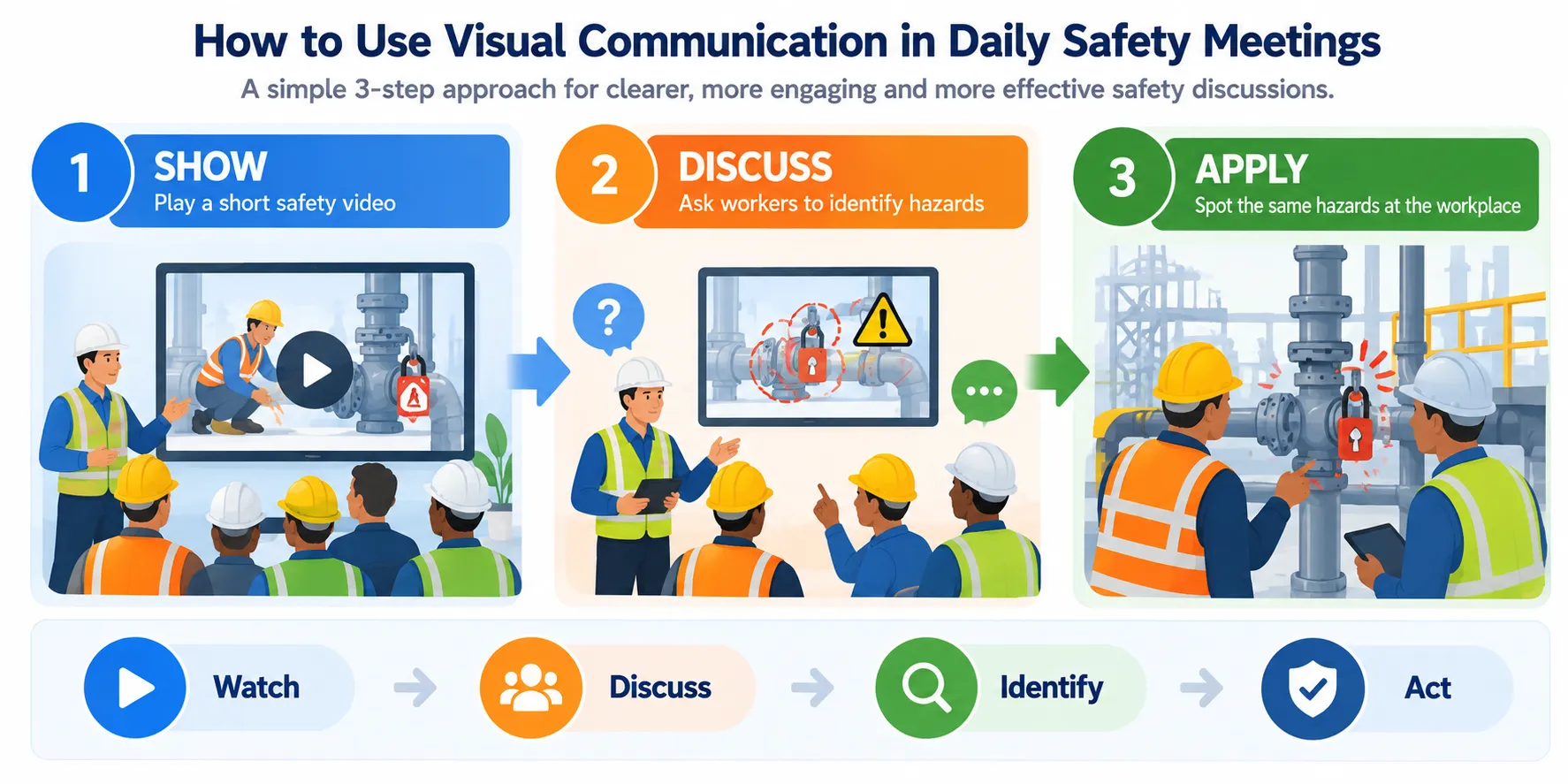
- 1Keep It Concise and Topic-Specific: Avoid long, comprehensive presentations or demonstrations during morning TBTs. Instead, use focused micro-learning videos that demonstrate a single hazard or procedure (e.g., Working at Height, Hot Work Permits, or PPE Pre-Checks).
- 2Standardize Across Shifts: Ensure day shift, night shift, and subcontractor teams receive identical messaging by using central, visual employee safety videos. This eliminates variance in how individual supervisors interpret safety rules.
- 3Encourage Interactive Spotting: End the video by asking workers to spot potential real-world violations and observations in the day’s work area. Turning a passive briefing into an active exercise builds hazard-hunting mindsets.
Elevating Safety Using Visual Media – The TECH EHS Approach
Building high-quality, technically accurate safety videos requires a rare collaboration: deep engineering and safety expertise and high-end animation capabilities. Generic stock videos fail because workers quickly dismiss content that doesn’t match their exact plant layout, equipment models, or operating procedures.
For more than 20 years, TECH EHS has set the industry standard in visual safety communication. As a dedicated safety-domain specialist, TECH EHS creates custom, site-specific 3D safety animations and workplace safety videos.
Whether your plant requires custom 3D animations for standard operating procedures, site-specific contractor safety inductions, high-risk LOTO walkthroughs, or incident recreations, TECH EHS closes the gap between regulatory requirements and actual comprehension. Beyond video production, TECH EHS empowers safety leaders to build a modern, connected safety architecture using new-age software, AI-powered tools, and comprehensive digital frameworks.
The Future of Safety Meetings is Visual
The ultimate ‘KRA’ of daily safety meetings is simple: turn compliance guidelines into safe work behavior. When organizations rely only on spoken words and paper checklists, it leaves major gaps in workforce understanding, retention, and execution.
By utilizing accurate safety training videos to demonstrate safety in daily meetings, EHS managers transform routine briefings into engaging visual sessions. The result is clearer communication, better hazard recognition, lower incident rates, and a safety culture in which every worker understands what to do and why it keeps them safe.
