
Table of Contents
Introduction
In 2026, the conversation around Environment, Health, and Safety (EHS) has shifted.
Five years ago, safety training was often viewed as a compliance requirement, just like a box to tick. But today, for CXOs and ESG leaders, it is a material business risk variable. They understand that a safety lapse can disrupt operations, damage brand equity, trigger regulatory scrutiny, and materially impact ESG scores.
And in that conversation, something unexpected is emerging as a strategic lever:
What was once considered a communication add-on is now becoming a strategic EHS investment, particularly in high-risk industries such as pharmaceuticals, oil & gas, manufacturing, chemicals, construction, logistics, and data centers.
The question is no longer:
“Do we need animated safety videos?”
The question is:
“Can we afford to rely on static safety communication in a distracted, digital-first workforce?”
Lets us discuss this further.
The Reality of Safety Communication in High-Risk Industries
Let’s be precise.
According to the International Labour Organization (ILO), nearly 2.9 million people die each year due to work-related causes globally. In high-risk sectors, human error remains a primary contributing factor.
Research from the National Safety Council shows:
In India, Middle East industrial zones, and US manufacturing clusters, organizations are investing in digital EHS platforms, real-time dashboards, and compliance automation. Yet many still rely on:
There is a mismatch between digital transformation ambitions and the way safety communication is delivered.
That gap is where animated safety training is gaining strategic relevance.
Why Animation Works on the Shop Floor
A shop floor layout must be well understood by the employees who are working there. This ensures proactive risk assessment, proper PPE use, and regular training.
Animation safety videos must be used on shop floors for proactive safety management. Here are the benefits of implementing animation safety videos for shop floor training.
From Compliance Tool to ESG Asset
The strategic shift becomes clearer when we look at ESG.
Investors increasingly evaluate:
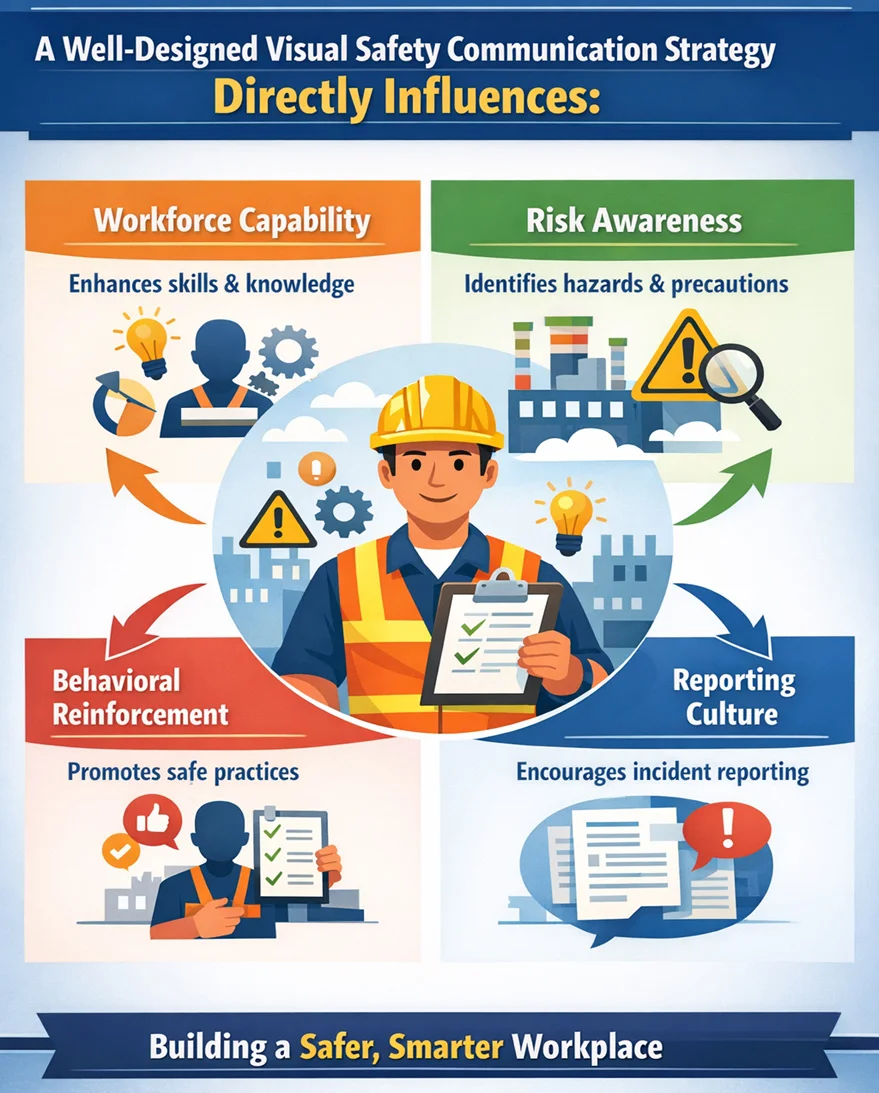
From Compliance Tool to ESG Asset
Every month, the EHS dashboard tells a story.
For example:
Three minor hand injuries.
Two near-misses involving bypassed machine guards.
Repeated observations of improper lockout/tagout steps during night shifts.
Nothing catastrophic. But not random either.
The data team flags it first. The analytics layer shows something deeper — it’s not equipment failure. It’s behavioral drift. Shortcuts under production pressure. Overconfidence. Inconsistent reinforcement.
The leadership team now has clarity:
This is not a compliance gap.
It’s a behavioral gap.
Instead of issuing another circular or conducting a generic refresher session, the approach shifts. A short animated module has been developed. It just recreates the exact scenario.
A technician is rushing to restart a machine. A missed isolation step. A momentary lapse is visualized clearly.
The consequence, slowed down, is impossible to ignore.
The animation mirrors the plant’s layout. The PPE looks familiar. The situation feels real. This is not just training. This is intelligence converted into action and action reinforced through storytelling.
That is how data-driven EHS digital transformation becomes visible on the shop floor.
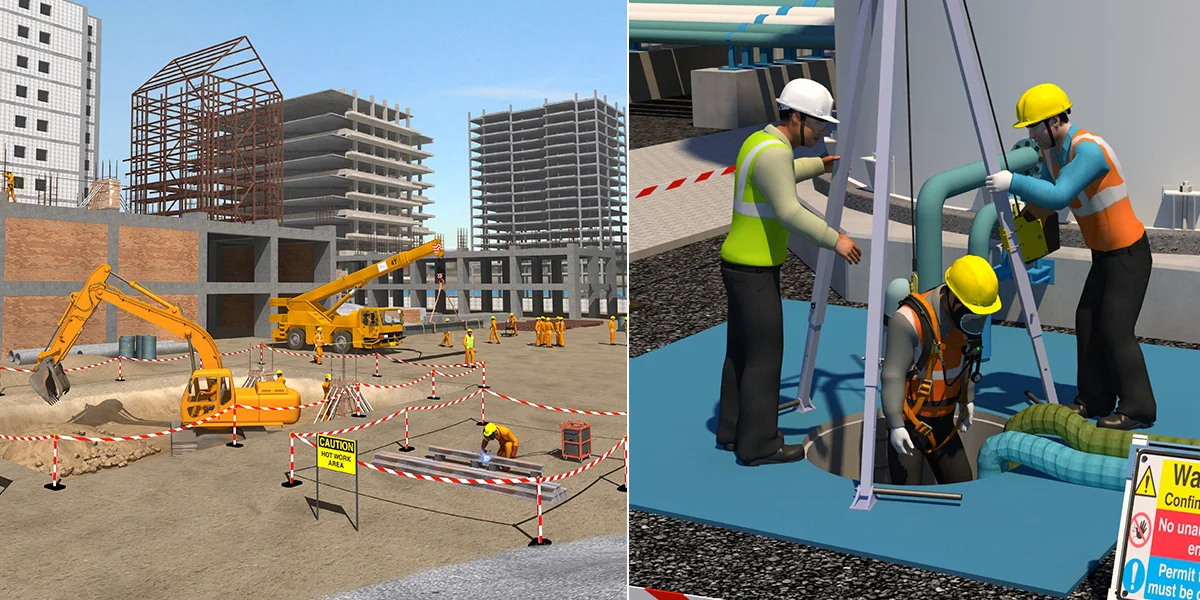
If you have read and imagined the video, here is a glimpse of the animation. Let us know which one left a lasting impression? The above read one or the visuals?
Storytelling: The Missing Layer in Traditional EHS
Imagine these two scenarios.
Scenario A:
A slide says: “Wear a fall protection harness above 1.8 meters.”
Scenario B:
An animated story shows:
A supervisor under pressure -> A worker skipping the harness steps -> A minor miscalculation -> A fall sequence visualized in slow motion -> The operational, human, and financial consequences
Now, which one drives behavioral memory?
Human beings are wired for stories. Hence, narrative-led safety animation helps retain engagement through human experiences, real consequences, and emotional memory anchors.
Industry Examples
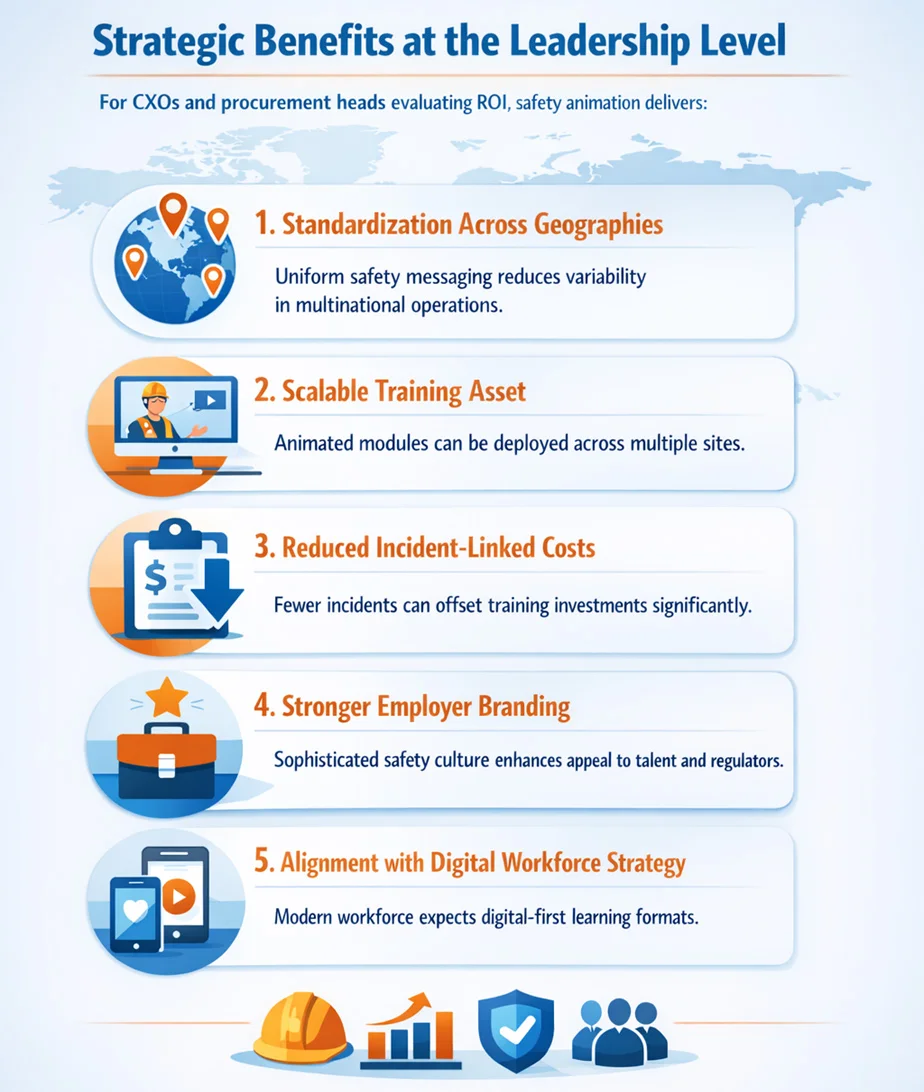
The Competitive Advantage of Visual Safety Intelligence
Organizations that lead in safety maturity do not treat communication as an afterthought.
They:
This is where safety animation solutions align with broader EHS digital transformation strategies.
At an ecosystem level, firms working with structured EHS partners such as TECH EHS often embed animation within:
Conclusion
Safety animation is not replacing safety governance. It is strengthening it.
In high-risk industries where operational complexity, regulatory scrutiny, and ESG expectations intersect, animated safety training is emerging as a strategic investment.
Organizations that recognize this early are not just modernizing their communication. They are reshaping how safety intelligence reaches the last mile — the worker on the shop floor.
