
Table of Contents
Introduction
Walk onto a chemical plant for the first time, and you’ll notice something immediately. It doesn’t feel like a regular industrial site. There are pipe racks running overhead, transport vehicles and tanks with placards you may not recognize, and a control room full of people watching numbers you can’t interpret. For an employee who works there, none of this is unusual. For a visitor, though, it can be genuinely overwhelming, and that’s exactly where risk creeps in.
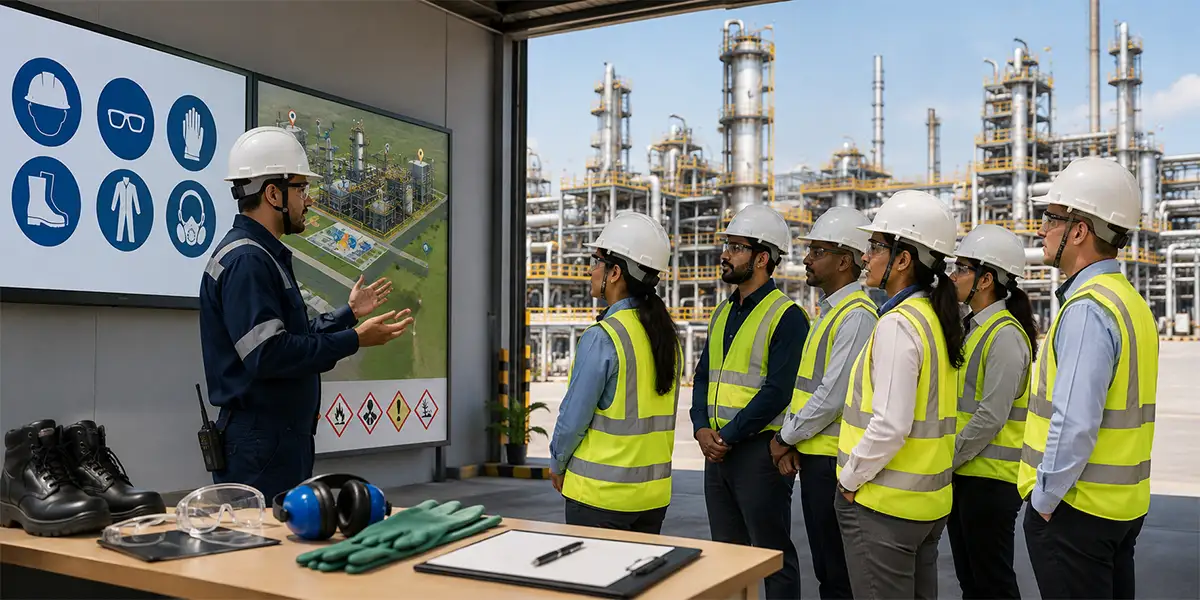
Chemical facilities also host more visitors than most people assume. Auditors, regulators, vendors, contractors’ guests, insurance assessors, even community members on plant tours. Only a few of them are trained personnel. None of them will ever touch a valve or open a permit. But if something goes south while they’re on site, a generic “watch your step, wear this hard hat” induction isn’t going to help them make the right call in the first ninety seconds.
That’s the gap this blog is about. Not employee training, which chemical companies already invest heavily in, but the shorter, sharper safety induction training that visitors get before they’re allowed past the gate.
Why Visitor Induction Is Different in Chemical Facilities
A visitor to a warehouse or a construction site mostly needs to know where not to walk and what PPE to wear. A visitor to a chemical plant needs a bit more than that. They need a working sense of what could go wrong around them, even if they’ll only be on site for two hours. That includes recognizing alarm types, knowing where to go if a horn sounds a certain pattern, and understanding why a colleague might suddenly tell them to stop walking.
This isn’t about turning visitors into safety experts. It’s about giving them just enough situational awareness that they don’t become a liability to themselves or anyone else during an incident.
Challenges Unique to Chemical Industry Induction
Hazard Communication Visitors Don’t Recognize
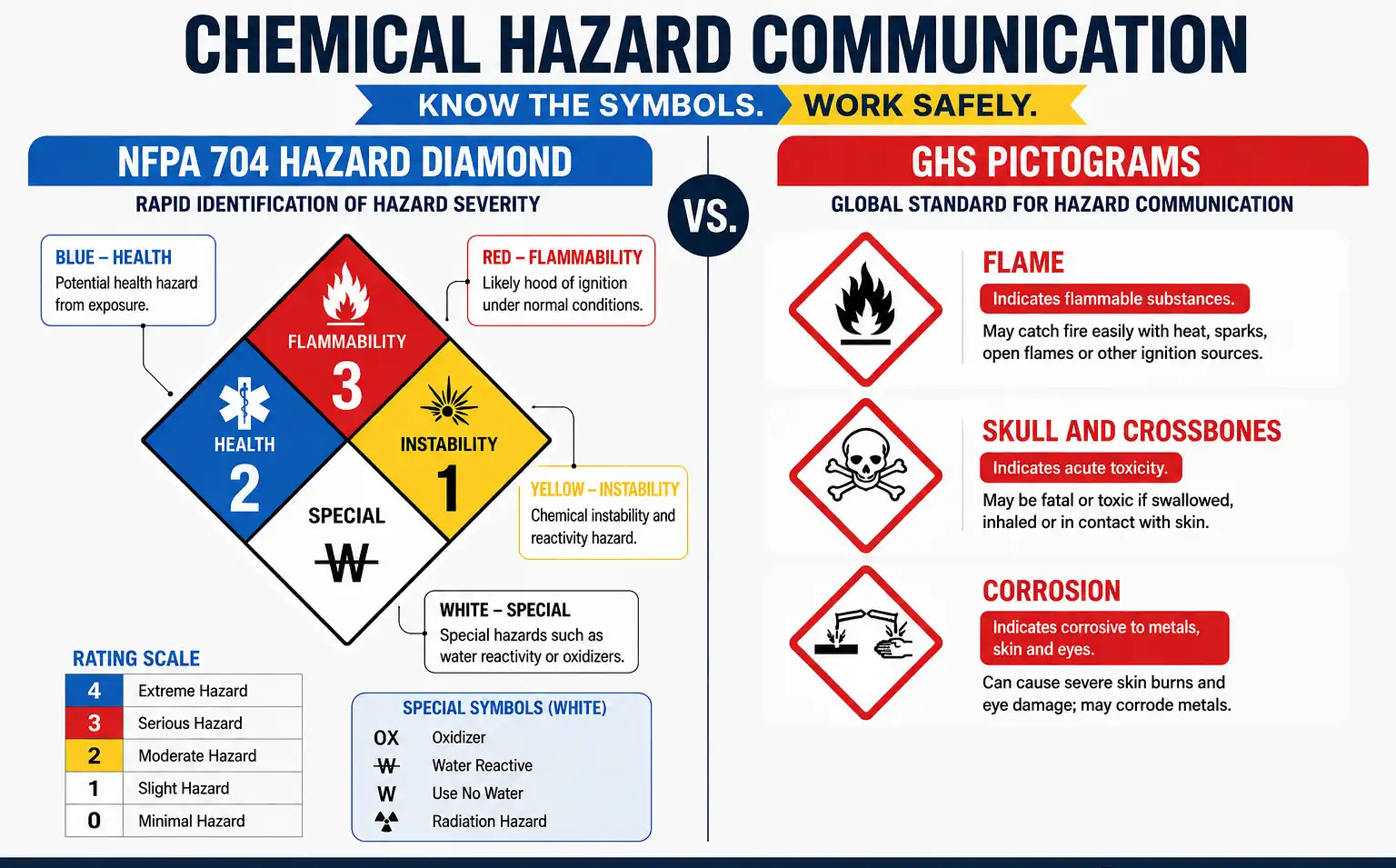
Most visitors visiting your facility won’t be familiar with, say, an NFPA 704 hazard diamond or a GHS pictogram. These labelling systems might be ok for a trained worker to look at. But a first-time visitor has no context for what a red “3” or a skull and crossbones pictogram actually means for their safety.
Process Safety Is a Different Language
Most industries induct their visitors on occupational safety. Watch your footing, stay clear of moving equipment, and more. Chemical plants have that too, but they also carry a second layer most visitors have never encountered, called process safety. This one’s less about tripping over something and more about what happens when a reaction runs away, or a system loses containment. It’s a different kind of risk, and honestly, a harder one to picture if you’ve never seen it.
OSHA didn’t write its Process Safety Management standard (29 CFR 1910.119) as a formality either. It exists because these particular hazards don’t stay contained the way a typical workplace accident does; they can escalate fast, and the standard specifically targets facilities working with highly hazardous chemicals above certain threshold quantities.
Try explaining all of that to someone in five minutes, and you’ll see why it’s tempting to just skip it. But skip it, and that visitor walks around the plant with no real sense of how differently things can go wrong, compared to almost anywhere else they’ve been.
Zoned Areas and Ignition Restrictions
Certain areas of a chemical site are classified based on the likelihood of a flammable atmosphere being present. In these zones, something as ordinary as a mobile phone or a static spark from clothing can be a genuine ignition risk. A visitor from outside the industry generally has no instinct for this. They’ve never had to think about their phone as a hazard.
Shelter in Place vs. Evacuate
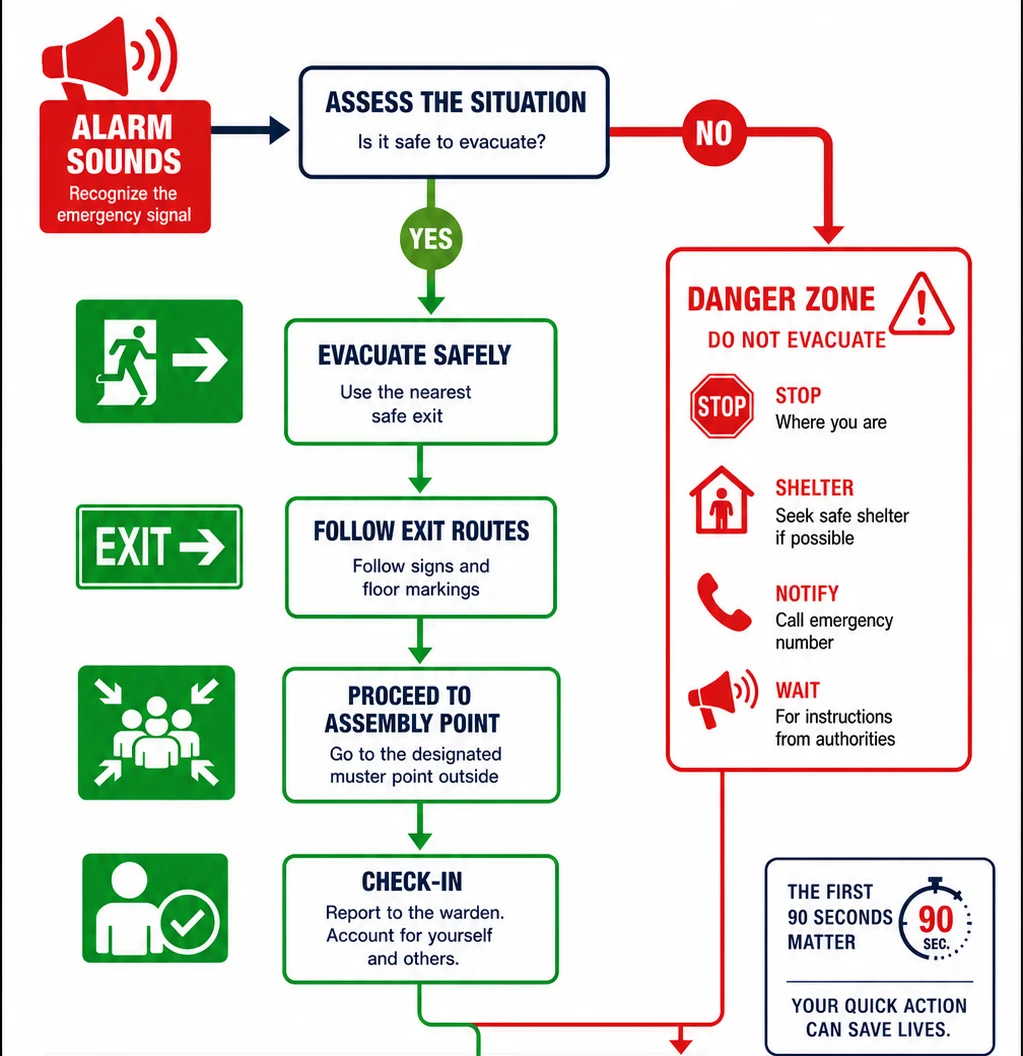
Fire drills train people to leave the building. Chemical release response sometimes requires the opposite: staying indoors, closing off ventilation, and waiting for an all-clear. Getting this decision wrong, evacuating when you should shelter, or vice versa, can put a visitor directly into a toxic plume. This single point often gets rushed or skipped in shorter visitor safety inductions, and it shouldn’t be.
Regulatory Layers That Add Complexity
Depending on where a facility operates, it may sit under overlapping frameworks. In the United States, that’s OSHA’s PSM standard. In the European Union, it’s the Seveso III Directive (2012/18/EU), which governs major-accident hazards involving dangerous substances and was introduced after lessons learned from earlier chemical disasters, including the original 1976 Seveso incident in Italy.
Visitors don’t need a legal briefing, but the site safety induction content still has to reflect what these frameworks actually require on the ground, like emergency information and hazard awareness for anyone present at the site.
Short Visits, Dense Information
An auditor might be on site for three hours. A vendor rep might be there for one. Neither has time for a lecture, yet both need functional hazard literacy before they step past reception. Compressing this into something retainable, without stripping out anything critical, is the real challenge most inductions fail to solve.
What an Effective Chemical Industry Visitor Induction Should Cover
Why Animation Works Better Here
Most of the hazards on a chemical site are invisible. You can’t see a vapor cloud forming or maybe a gas leak in progress the same way you can see an unguarded machine or an open trench. That’s a real problem for induction content that relies on photos, text, or a supervisor talking through a slide deck.
Animation solves this by making the invisible visible. A short animated sequence can show how a vapor cloud might travel with wind direction, why a shelter-in-place order might be issued instead of an evacuation, or what a hazard diamond is actually telling you, all in a couple of minutes, without requiring the visitor to have any prior chemical safety background.
It also solves the consistency problem. Every visitor sees the same information, delivered the same way, regardless of who happens to be running induction that day. For multilingual visitors, whether that’s a foreign auditor, an international vendor team, or a community group, the same animated sequence can be delivered with localized narration instead of needing a different presenter for every language.
FAQs
