Table of Contents
Introduction
Let’s read a story that keeps repeating.
At a large-scale petrochemical shutdown, everything was “compliant on paper.” Permits were issued. PPE was distributed. Inductions were completed.
Yet within 72 hours, three near-miss incidents occurred, each involving contract workers.
Now, if you notice, then none of these failures was due to a lack of policy. They were failures of workforce readiness.
This is the paradox facing modern EHS leaders. Despite robust frameworks, contractor risk remains disproportionately high.
On the contrary, most organizations still measure the number of inductions completed, training hours logged, PPE distributed, and similar tangible, traditional measures. But leadership-level EHS maturity demands a shift towards “Is the workforce actually ready to work safely in this specific environment, at this moment?”
Organizations need a modern contractor safety management approach that evaluates workforce readiness dynamically rather than relying on static compliance metrics.
| Dimension | What It Means |
|---|---|
| Capability | Skills, certifications, experience |
| Context | Site-specific risks, changing conditions |
| Behavior | Real-time decision-making under pressure |
And throw light upon the fact that static checklists cannot capture this!!
The Fragmentation Problem in Contractor Ecosystems
On the org chart, it’s a neat stack of vendors and subcontractors. On the ground, it’s a living network of people, relationships, and information gaps.
You might see:
Each new layer adds another filter between leadership intent and frontline reality. With every hand-off, a little bit of context is lost, a little nuance gets mistranslated, and responsibility starts to blur.
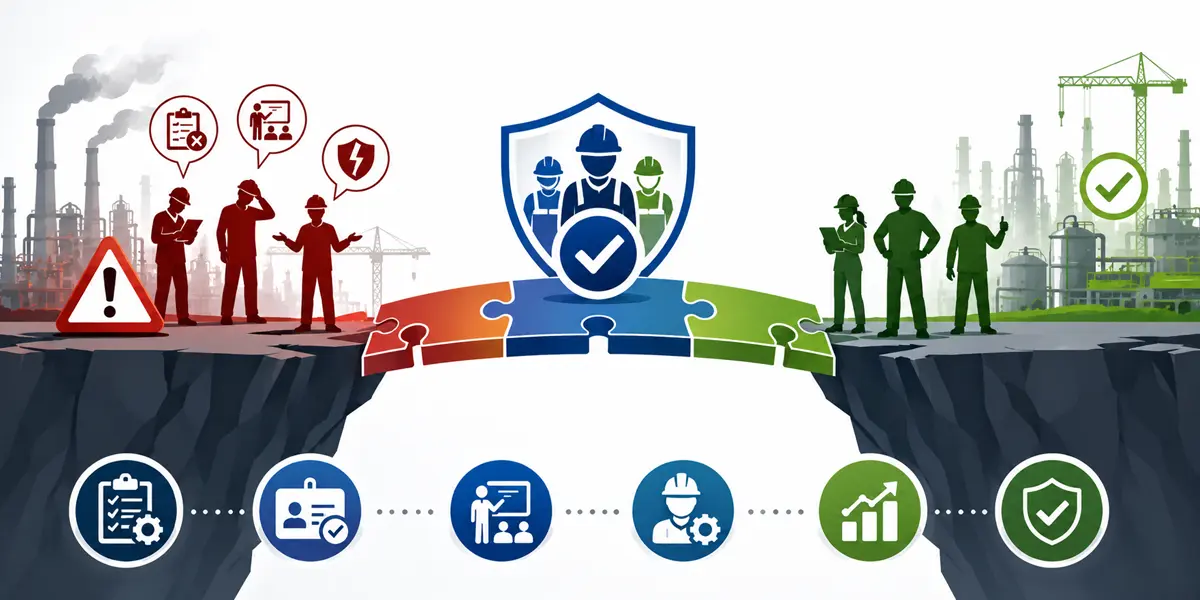
Slowly, the system fragments.
Information exists, but rarely in one coherent picture. You get:
Training records that exist—but are not validated
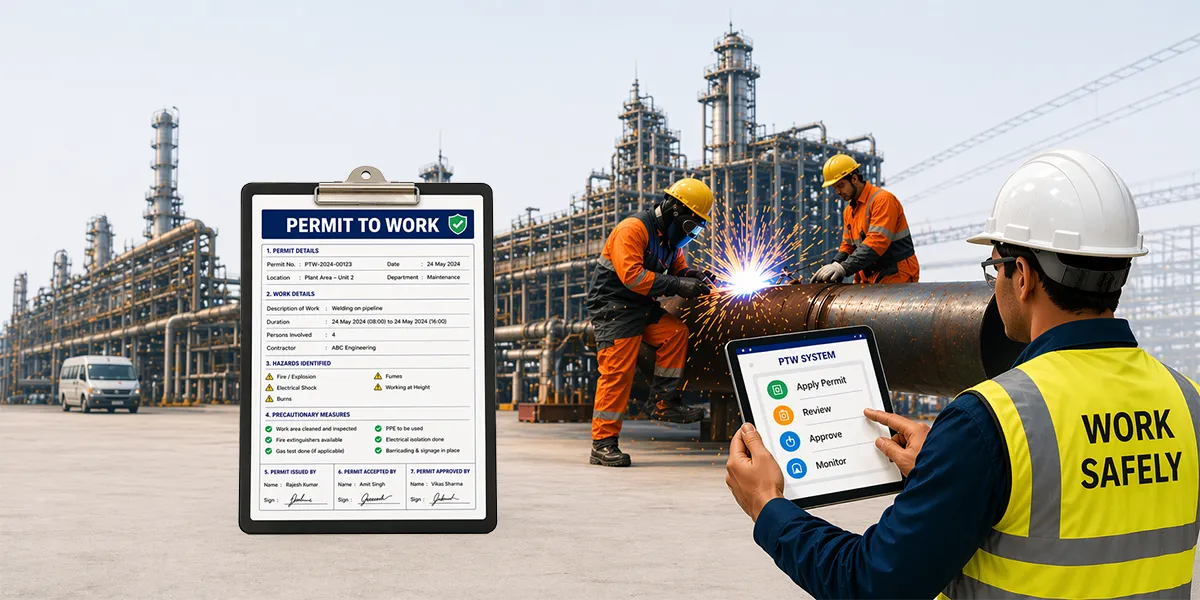
Permits that are issued—but are not context‑aware
Risk assessments that are completed—but remain static, not dynamic
The Shift Toward Digital EHS Ecosystems
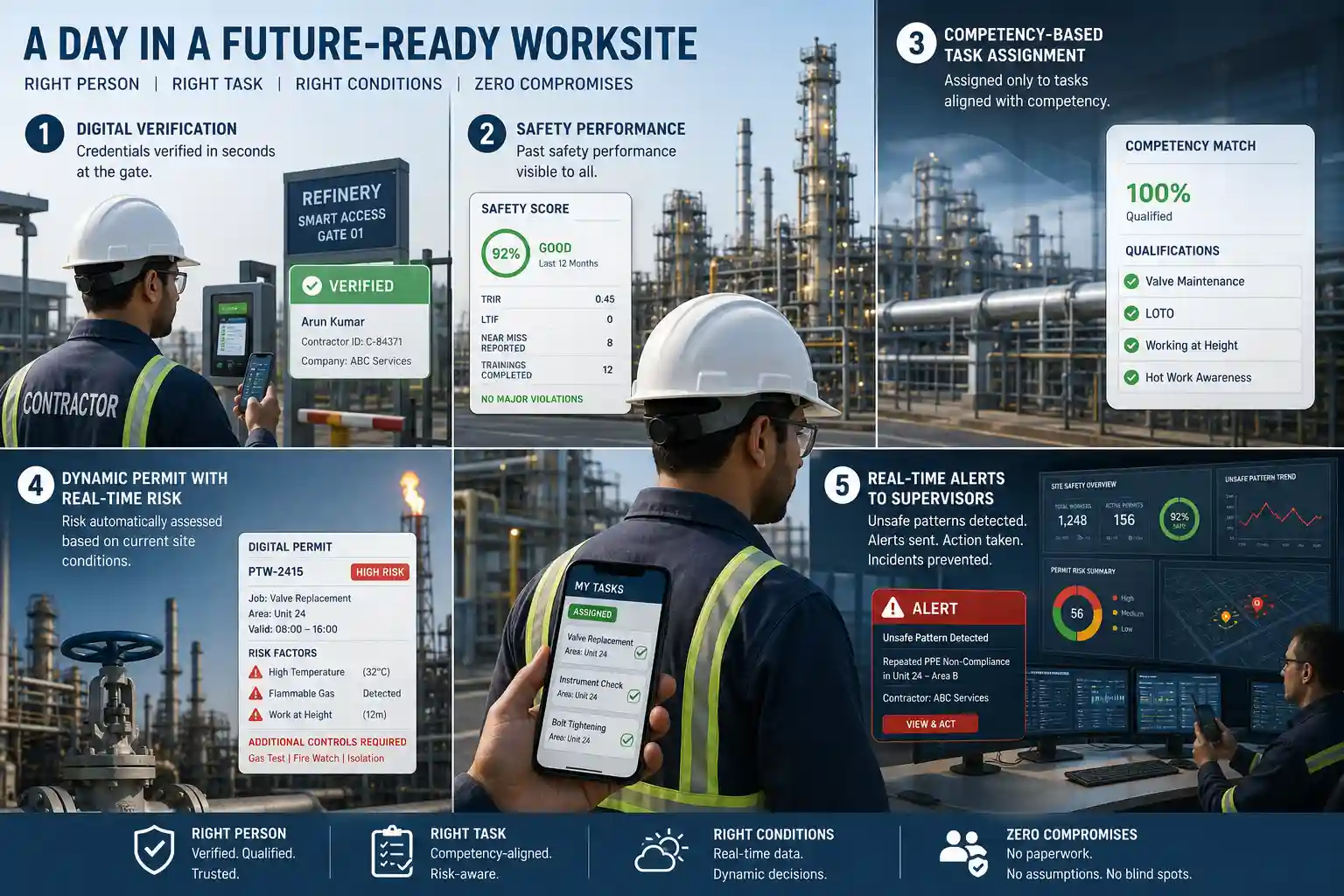
The solution is a connected, intelligent EHS system. A system that is tangible but also ensures that leaders have proper control and real-time visibility to all the EHS happenings and more.
The EHS digital ecosystem is not as a technology upgrade but as a risk governance transformation.
So, what changes in a digitally mature environment?
From static training → dynamic competency validation.
From permit issuance → risk-aware work authorization
From incident reporting → predictive risk signals
From contractor onboarding → continuous readiness monitoring
So, will adopting technology solve the EHS problem?
There’s a strange paradox: on paper, everything looks perfect, yet risk quietly builds beneath the surface.
Picture a large petrochemical shutdown where permits are issued, PPE is distributed, and inductions are completed. Within just 72 hours, three near-miss incidents occur — all involving contract workers.
None of these failures stemmed from missing policies; they stemmed from a lack of true workforce readiness. Unfortunately, this is the uncomfortable reality many EHS leaders face: while traditional metrics like completed inductions, logged training hours, and PPE counts look impressive, they don’t answer the real question — is this specific worker, at this specific site, actually ready to work safely right now?
In the real world, contractor ecosystems are messy. What looks like a clean vendor stack on an org chart is, on the ground, a tangled web of subcontractors, diverse languages and literacy levels, conflicting safety cultures, and inconsistent onboarding practices. With every handoff, a bit of context is lost — risk assessments remain static rather than adapting to changing conditions, training records exist but aren’t always validated, and permits are issued without being truly risk-aware. Dashboards still show green, but leaders are often operating with partial visibility and a false sense of control. This is where the current technology inflection point becomes crucial.
The convergence of data, mobility, and intelligent systems is reshaping EHS — but only if it’s used to orchestrate workflows, not just digitize old checklists. In a digitally mature EHS ecosystem,
In this way, contractor risk doesn’t just sit in an EHS silo; it becomes a core part of ESG strategy, where investor expectations, regulatory scrutiny, and internal governance all converge around one central idea.