Table of Contents
Introduction
A refinery shutdown begins with something small.
It was not an explosion, not a catastrophic failure, just a worker skipping a routine inspection because the previous shift was delayed.
Hours later, a pressure fluctuation went unnoticed. And even the maintenance logs were incomplete. Thus, communication gaps widened. By the time alarms were activated, the incident was no longer preventable.
For decades, this has been the reality of environmental health and safety management across high-risk industries.
But the nature of industrial risk has changed.
Today’s operations move faster, are more connected, and are under more public and regulatory scrutiny than ever before. Rules and expectations keep shifting. ESG reporting has moved from a checkbox exercise to a core boardroom priority. And now, keeping operations running smoothly depends on real safety intelligence.
This is where AI Solutions for EHS are reshaping the conversation.
The Problem with Traditional Safety Systems
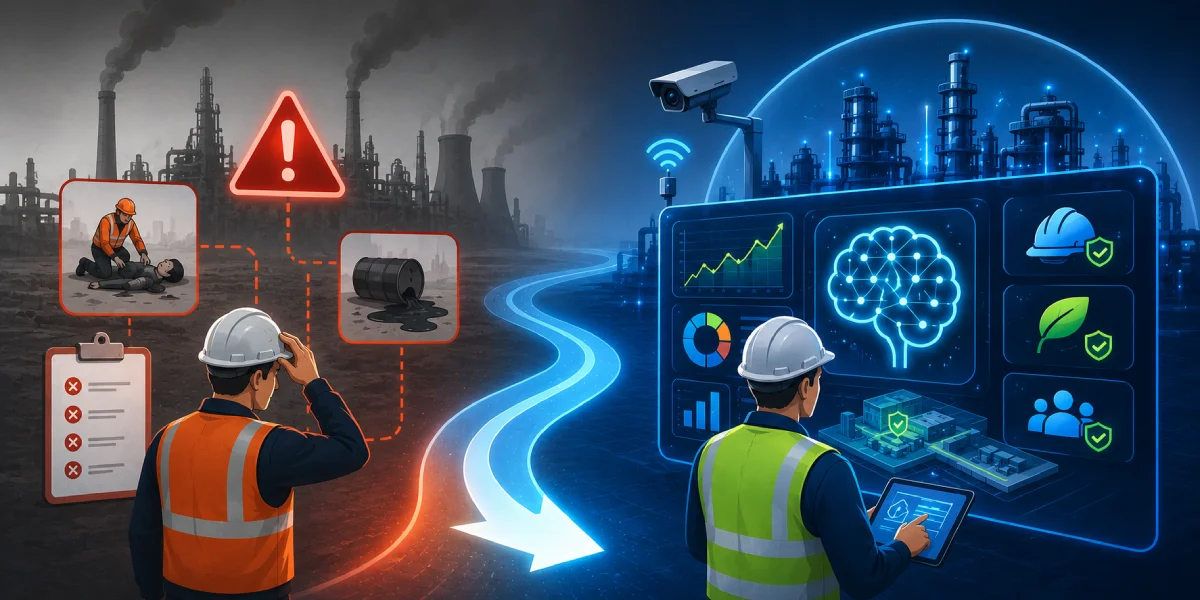
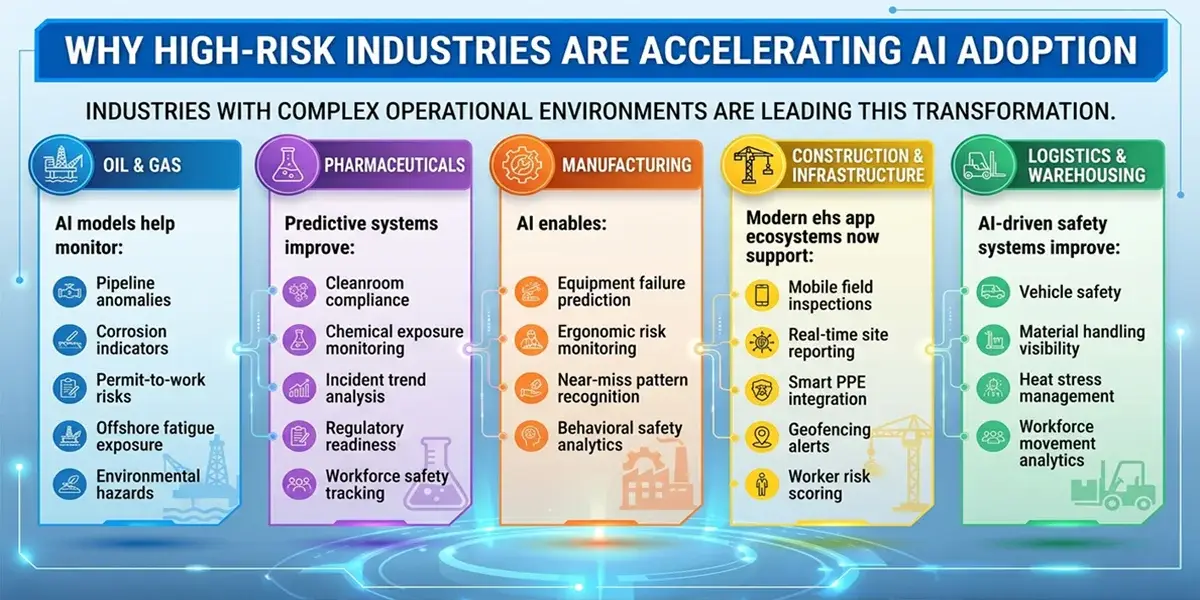
Today’s organizations are moving from reactive safety programs toward predictive ecosystems powered by data, automation, machine learning, and intelligent analytics. The evolution of EHS management software is about anticipating risk before incidents occur. And across industries like oil & gas, pharmaceuticals, manufacturing, energy, logistics, and construction, this shift is accelerating rapidly.
Most legacy EHS software platforms were designed around recordkeeping.
Their core purpose was straightforward:
While these systems improved standardization, they remained fundamentally reactive.
A safety manager would only know about a hazard after:
In high-risk industries, delayed visibility creates operational exposure. A modern facility may already generate enormous amounts of operational intelligence through:
Traditional EHS management systems often capture this information but fail to interpret it dynamically.
AI is here to change the equation.
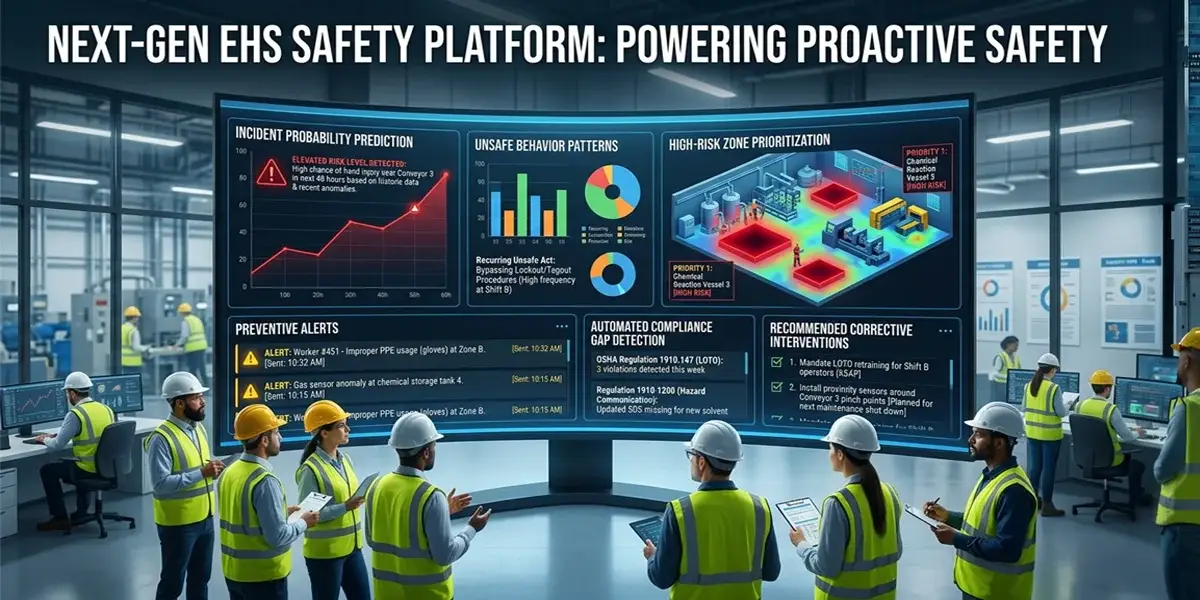
How AI is Reshaping Modern EHS Software & Management System Architecture
The evolution of intelligent safety systems is happening across multiple layers simultaneously.
1. Real-Time Hazard Detection
AI-powered monitoring systems can analyze:
For example:
A logistics facility may identify forklift collision risk patterns before accidents occur based on route congestion, worker movement density, operator behavior, or even shift fatigue indicators.
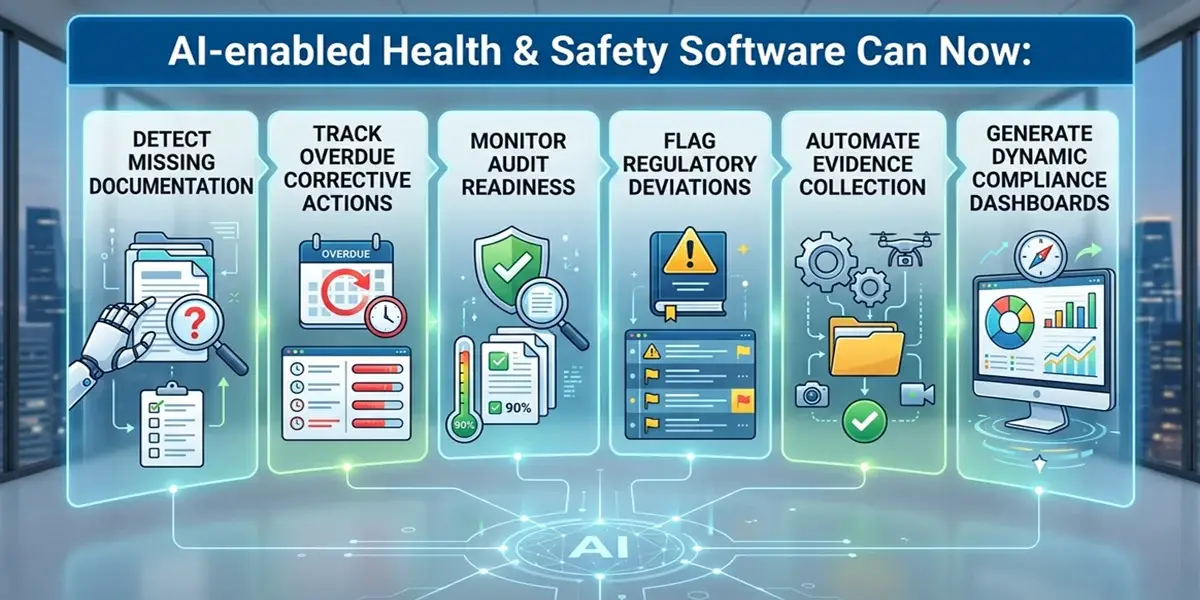
3. Automated Compliance Intelligence
Compliance complexity is increasing globally. Organizations operating across India, the Middle East, Europe, and the US must navigate:
The ESG Connection: Why AI Matters Beyond Safety
One of the biggest changes in this space is how everything is starting to come together — safety, sustainability, governance, workforce wellbeing, and operational resilience. These areas used to be handled as separate priorities. Now, leaders are realizing they’re all connected and together they shape long-term business performance and risk.
Because of this, boardrooms no longer see EHS as just a box-ticking compliance function. Instead, it’s becoming a strategic lever that supports ESG goals, keeps operations running, and strengthens overall organizational resilience.
This change is also reshaping how companies look at EHS management software. Leadership teams now want real-time visibility into ESG performance, strong environmental monitoring, and insights into how carbon and climate-related factors affect safety. They also expect clearer transparency around contractor governance and integrated sustainability reporting. On top of that, they’re looking for systems that can surface early warning signs of operational risk so they can act ahead of time, instead of only responding after an incident has already happened.
FAQs