
Table of Contents
Introduction
It is said that the human brain understands better when a story is involved. So let’s begin with one!
Imagine a routine maintenance activity at a large chemical manufacturing site. A contractor began hot work on a pipeline that they believed was isolated.
The permit had been issued.
The signatures were there.
The checklist was complete.
But a near miss happened!! That is because isolation was incomplete. And the loopholes included fragmented communication, and the permit was treated as a mere formality.
Why does this happen?
Thankfully, due to rising awareness, the question is no longer “Do you have a PTW system?”
It is: “Is your PTW system actually preventing risk or just documenting it?”
So let us dive deeply into what PTW is and how it has evolved in ePTW?
What is a Permit to Work System (PTW)?
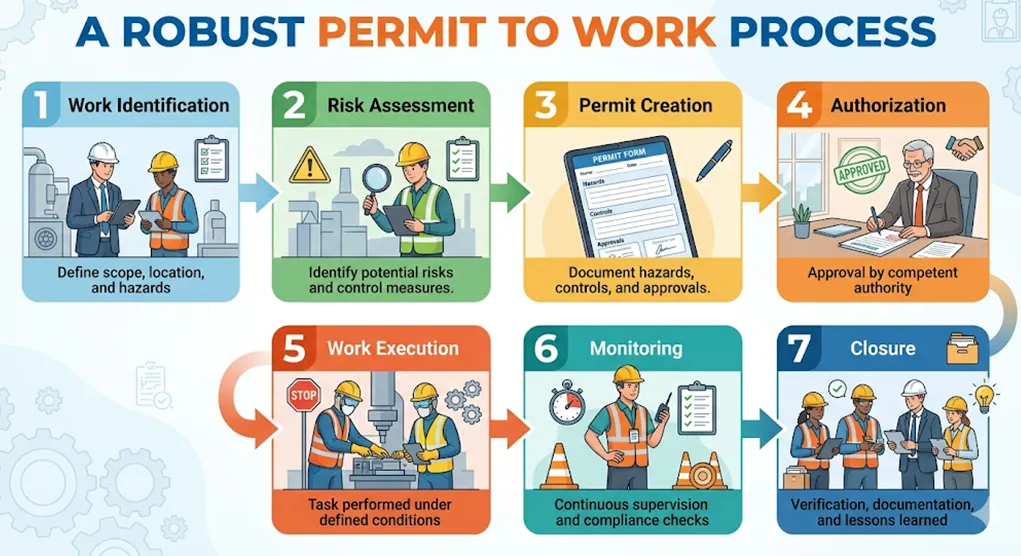
A proper definition implies that A Permit to Work System is a formal, documented process used to control high-risk work activities. It ensures that hazards are identified, risks are mitigated, and work is authorized under controlled conditions.
At its core, a PTW system is a risk governance framework, not just a safety checklist.
Key Objectives:
Example:
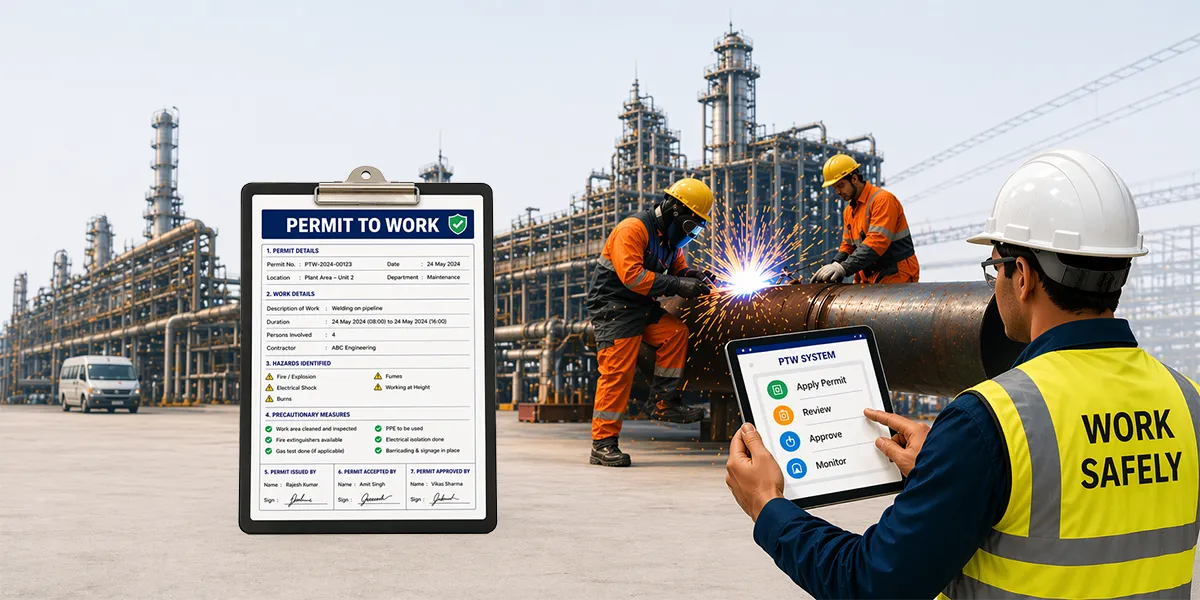
A maintenance technician needs to fix a leaking pipeline. They need a proper permit even though it is a 10-minute job. They need to fill out a Hot Work Permit.
As soon as the hot work permit is issued, a safety check is conducted to ensure the maintenance work proceeds without incident. Only after everything is safe is the maintenance allowed.
Types of Permit to Work Systems
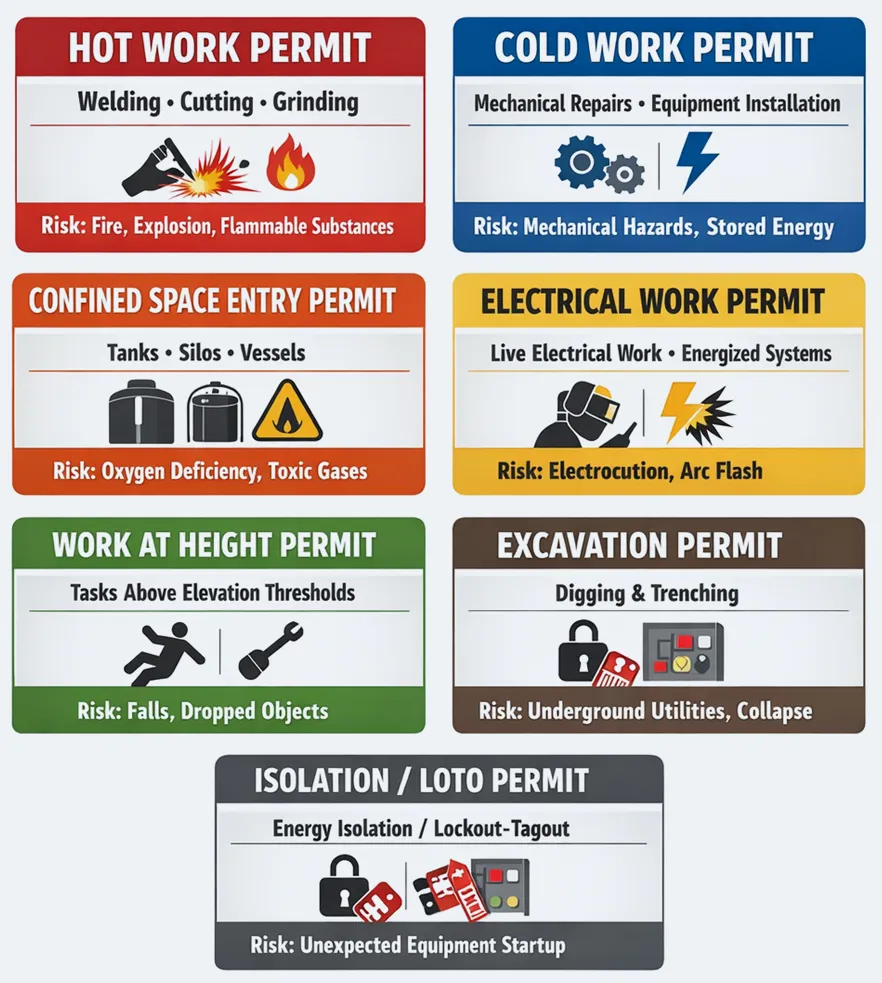
Different work activities require specialized permits. A mature organization deploys multiple PTW types aligned with risk categories. Every safety officer needs to understand the different types of permits required for different activities. And it is not the knowledge of these permits that is crucial, but the entire PTW process is important for safe work execution.
1. Hot Work Permit
For activities involving:
Risk: Fire, explosion, ignition of flammable substances
2. Cold Work Permit
For non-heat generating tasks such as:
Risk: Mechanical hazards, stored energy
3. Confined Space Entry Permit
For work inside:
Risk: Oxygen deficiency, toxic gases
4. Electrical Work Permit
For:
Risk: Electrocution, arc flash
5. Work at Height Permit
For tasks above defined elevation thresholds
Risk: Falls, dropped objects
6. Excavation Permit
For digging and trenching operations
Risk: Damage to underground utilities, collapse
7. Isolation / LOTO Permit
For energy isolation activities
Risk: Unexpected equipment startup
The Rise of Digital Permit to Work Software
Modern permit-to-work software transforms PTW from a static process into a dynamic safety control system.
Traditional PTW systems rely heavily on paper-based workflows. While familiar, they introduce critical inefficiencies, like
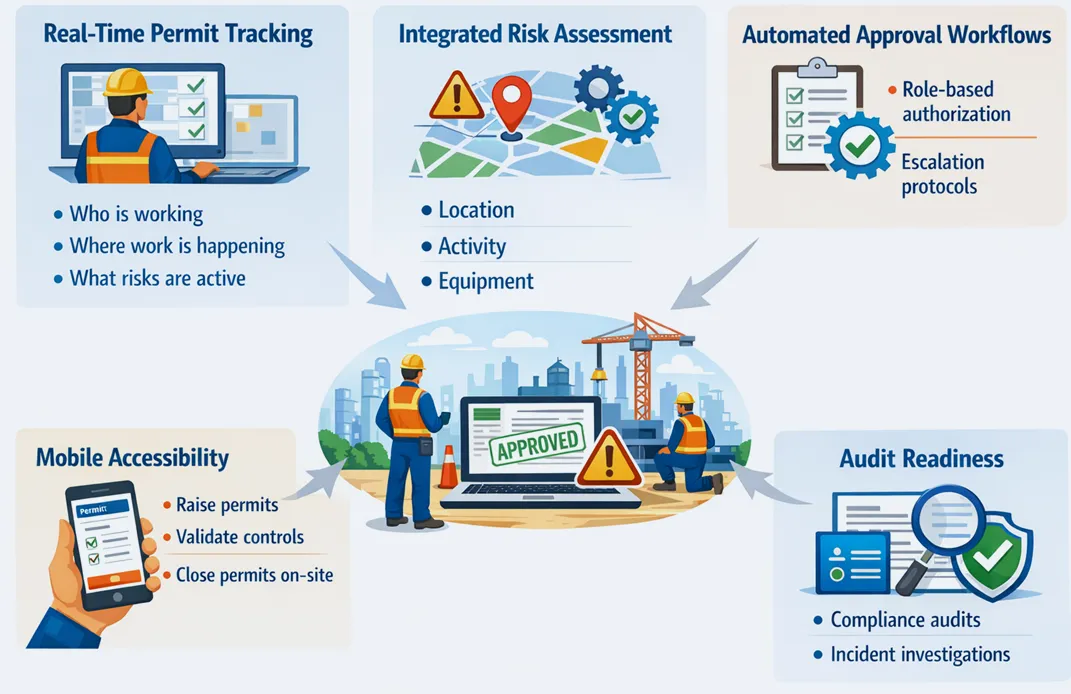
Modern permit-to-work software transforms PTW from a static process into a dynamic safety control system.
Traditional PTW systems rely heavily on paper-based workflows. While familiar, they introduce critical inefficiencies, like
FAQs
