

Table of Contents
- Introduction
- Redefining Participation in 2026: A Strategic Framework
- The Digital Inflection Point
- AI and Analytics
- ESG Pressure Is Redefining Safety Engagement
- Five Strategic Levers to Improve Workforce Participation
- How Structured EHS Manpower and Digital Ecosystems Enable Participation
- The Future: Participation 3.0
- Conclusion
- FAQs
Introduction
Imagine this:
A refinery reported 98% completion of safety training. On paper, compliance was flawless.
Yet near-miss reporting had declined by 37%.
The problem wasn’t knowledge. It was participation!
Across high-risk industries like oil & gas, pharmaceuticals, construction, energy, heavy manufacturing, leaders are discovering a critical truth: safety programs don’t fail because policies are weak. They fail because workforce engagement is passive.
And in an era shaped by ESG accountability, digital transparency, and investor scrutiny, passive participation is no longer acceptable!
The strategic question for leadership is no longer:
“Are employees trained?”
It is:
“Are employees actively participating in our safety ecosystem?”
The Participation Gap: Why Traditional Safety Programs Plateau
Research from the International Labour Organization estimates that 2.78 million work-related deaths occur annually, with hundreds of millions of non-fatal injuries. Despite decades of regulation, incident curves in high-risk sectors remain stubborn.
Why?
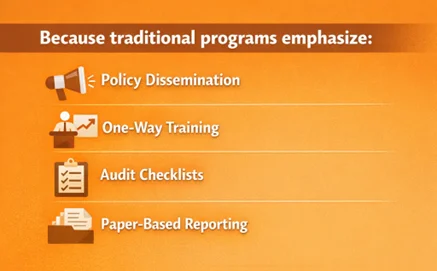
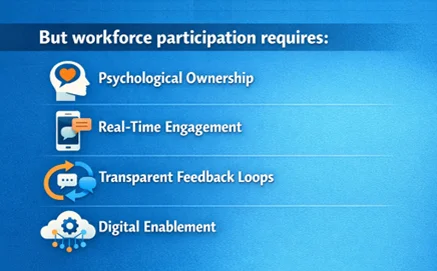
If organizations implemented monthly toolbox talks with 100% attendance. There is a chance that worker-initiated hazard reporting will remain low. But after digitizing observation reporting and enabling multilingual mobile access, reporting can increase significantly.
The difference is not policy. It is accessibility and inclusion.
Redefining Participation in 2026: A Strategic Framework
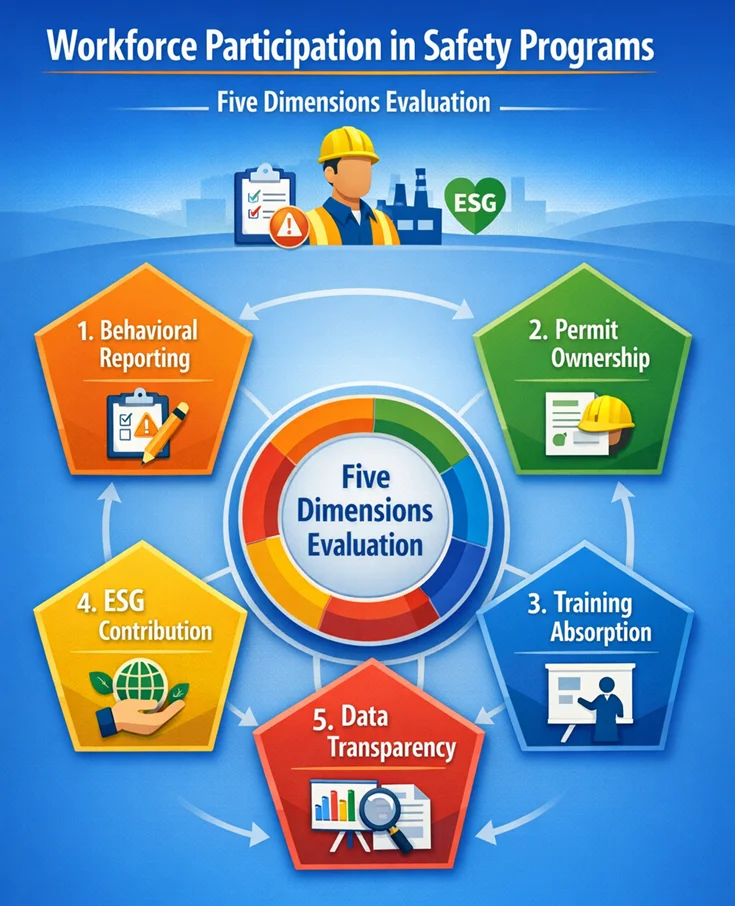
Workforce participation in safety programs must now be evaluated across five dimensions:
1. Behavioral Reporting
Are employees voluntarily reporting hazards and near misses?
2. Permit Ownership
Are contractors and operators actively engaging in digital permit-to-work (PTW) systems, or merely signing off?
3. Training Absorption
Is training translating into observable behavioral change?
4. ESG Contribution
Can safety engagement metrics feed into sustainability and governance reporting?
5. Data Transparency
Does leadership have real-time visibility into frontline engagement trends?
AI and Analytics
Board-level conversations increasingly focus on predictive risk. However, many organizations still rely on lag indicators:
However, these are outcome metrics.
Forward-looking organizations are now analyzing:
So, when machine learning models are used in industrial analytics, they can help identify important patterns, such as:
This approach shifts the focus of safety from simply following rules to understanding and improving behaviors.
It’s important to remember that just having digital tools isn’t enough to boost engagement; effective leadership in interpreting and acting on the data is crucial.
Five Strategic Levers to Improve Workforce Participation
Saying that workforce participation in safety must be tangible, but how to implement it? With changing workforce dynamics, it is necessary to identify the specific strategic levers to improve workforce participation in safety programs.
1. Simplify Reporting Interfaces
Mobile-first, multilingual access improves inclusivity across contract and migrant workforces. When the workforce feels familiar and included, they are more likely to report and also understand.
2. Close the Feedback Loop
Workers disengage when they never hear what happened to their report. Automated notifications and status visibility matter. Once they have visibility into how positive their reporting actions are, they are more likely to ensure that they do not miss anything.
3. Integrate Safety with Operations
When EHS management systems operate in isolation from maintenance, HR, or quality, participation becomes fragmented. Therefore, an integrated EHS software management system is essential to ensure all systems work hand in hand.
4. Use Data to Reward Transparency
Who does not like to be awarded and acknowledged? And if the proper reporting work staff is acknowledged and even rewarded for their behavior, just imagine the mammoth domino effect that will happen when it comes to reporting issues. And remember, high reporting rates signal a strong culture, not risk.
5. Align Participation with ESG Narrative
Translate workforce engagement into board-ready dashboards. The increase in workforce reporting trends must be part of ESG reporting. Work on the trend and ensure a decline in issues and incidents as the reporting culture stays top-notch.
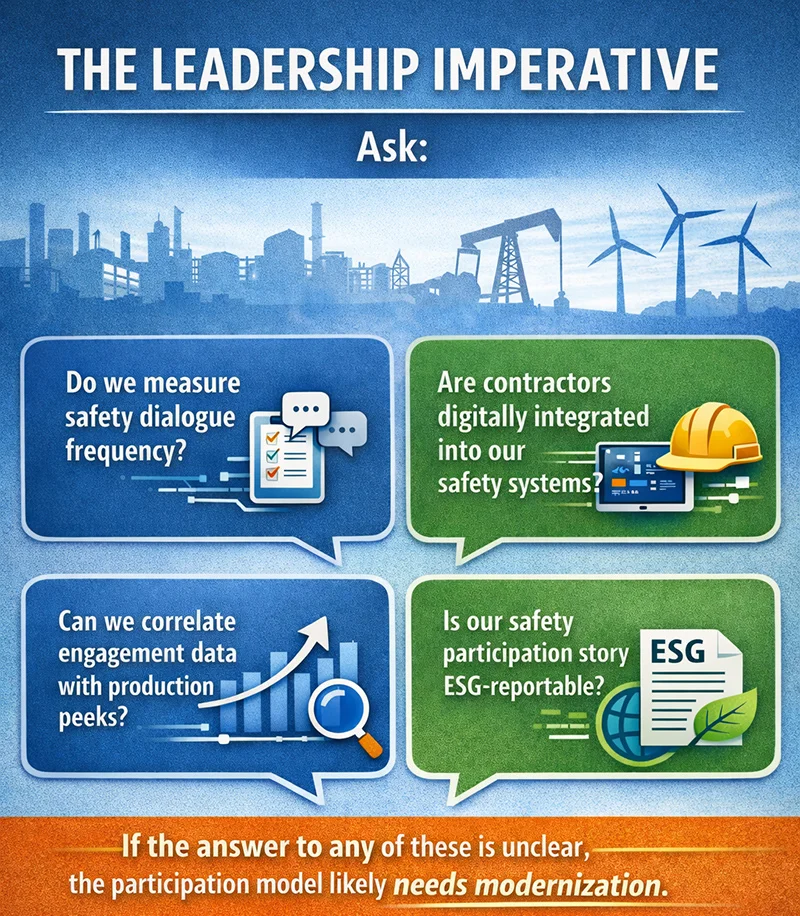
The Future: Participation 3.0
Well, the future of worker participation is brighter only if industry leaders pave the way for proper execution.
The next evolution of safety participation will include:
However, technology remains an enabler, not a substitute for leadership intent.
The organizations that will lead in the next decade are those that treat workforce participation not as a safety KPI but as a governance pillar.
Conclusion
Improving workforce participation in safety programs requires more than awareness campaigns. In high-risk industries across India, the Middle East, the US, and global markets, the shift is clear: Safety programs must evolve from policy-driven compliance to data-enabled engagement ecosystems.
Participation is the foundation of sustainable industrial growth.
